Get your free personalized podcast brief
We scan new podcasts and send you the top 5 insights daily.
Tech giants like Google and Meta maintain closed advertising ecosystems ("walled gardens"). This control, while profitable, fundamentally limits AI's potential to automate and optimize media buying across different platforms, as AI agents cannot access and purchase inventory freely.

Related Insights
Building a complex stack of specialized AI tools is a losing strategy. Large platforms have infinite data and resources to integrate superior features directly into their existing ecosystems (e.g., Google Ads). Most standalone AI startups will be acquired or become extinct as their functions are absorbed.

Ben Thompson argues AI apps should adopt a Meta-style advertising model based on deep user understanding, rather than Google-style contextual ads tied to prompts. This avoids conflicts of interest and surfaces products users didn't know they needed, creating more value for both users and advertisers.
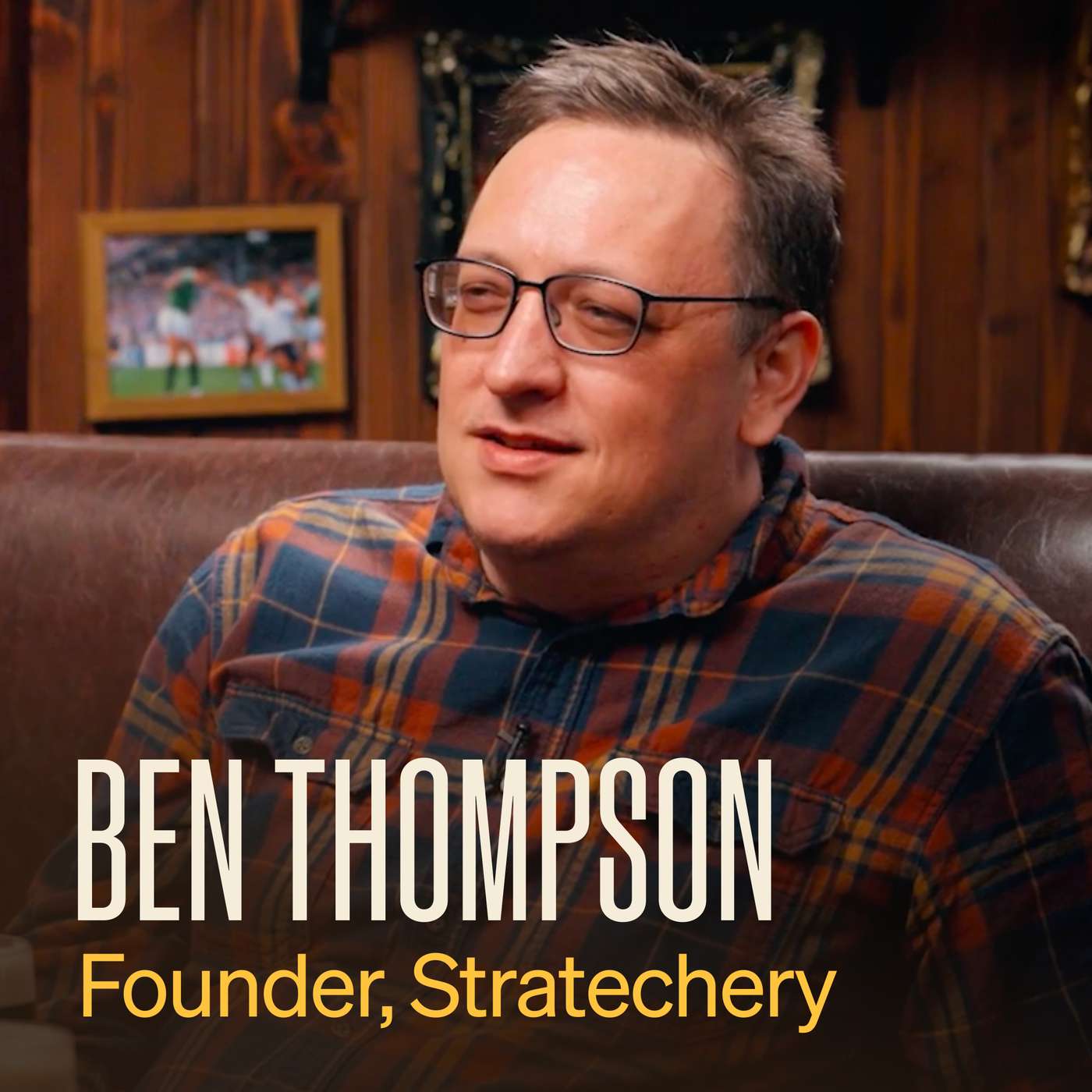
Beyond superior data, big tech's dominance is built on two other pillars. First, native ad formats that blend into feeds overcome the 'ad blindness' that plagues display ads. Second, easy self-service tools create a massive long-tail of small business advertisers that programmatic platforms cannot effectively capture.

AI models for campaign creation are only as good as the data they ingest. Inaccurate or siloed data on accounts, contacts, and ad performance prevents AI from developing optimal strategies, rendering the technology ineffective for scalable, high-quality output.

Despite early 2010s optimism that programmatic ads would equalize competition, tech platforms like Google have only increased their market share. The promise that publishers could match big tech's ad targeting scale and reclaim revenue never materialized, as tech's inherent advantages proved too dominant.
Programmatic ad buying, standard in digital, doesn't work well for TV. The market is too concentrated, with ~90% of inventory controlled by just 10 major publishers. This makes direct integrations and relationships far more effective and efficient than automated, auction-based programmatic systems.

AI is excellent at pattern recognition for media buying, but it lacks business context. It might recommend cutting a lower-performing campaign, not knowing the strategic goal is market expansion. Human oversight is essential to interpret AI suggestions and align them with broader business objectives, preventing strategically poor decisions.

When customers use AI for product discovery, brands lose visibility into crucial pre-purchase behavior like comparison shopping. This interaction data becomes siloed within the third-party AI platform, creating a new blind spot that makes it difficult to measure marketing impact or understand the customer journey.

Meta's acquisition of Manus, an agentic AI tool, reveals their goal to completely automate the media buying cycle. Soon, advertisers may only need to input a product URL and budget, with AI handling everything from creative generation to campaign management, making manual intervention obsolete.

While Google aggressively pushes AI search, this new model lacks a proven advertising equivalent. This creates a fundamental tension where product innovation directly threatens its primary revenue source. Google's greatest strength—its search monopoly—is also its greatest vulnerability in the AI transition.
