Get your free personalized podcast brief
We scan new podcasts and send you the top 5 insights daily.
Zvi Moshwitz argues against the "X is not the bottleneck" framing for bioweapon risk. In a multi-step process, solving any single step with AI makes the entire chain easier to complete. Removing the AI knowledge barrier is like giving away a key part of the blueprint to bad actors, dramatically increasing the risk.

Related Insights
AI models can modify the genetic sequences of known bioweapons like ricin just enough to evade current screening protocols at DNA synthesis companies. This creates functional but 'obfuscated' threats, demonstrating a critical vulnerability in our biodefense supply chain.

Top AI labs and biotech firms are urging the US government to mandate screening for nucleic acid synthesis orders. This pragmatic approach targets a concrete threat—AI-assisted bioweapon creation—rather than abstract superintelligence risks.

There's a critical asymmetry in AI risk timelines. For cyber threats, an AI that finds an exploit can create a patch almost instantly. For biological threats, an AI might design a dangerous virus, but developing and deploying the corresponding countermeasure (e.g., a vaccine) takes far longer than the ~6 months before the virus-design capability diffuses to open-source models.
Contrary to the focus of many safety frameworks, AI's biggest capability boost is not for novices, who remain incompetent, but for 'mid-tier' actors like PhD students. These individuals have foundational knowledge, making them the most dangerous recipients of AI assistance.
Contrary to popular belief, AI models provide minimal help to inexperienced individuals in complex biological tasks. The real danger lies in their ability to "uplift" those with advanced degrees, like a PhD in molecular biology, giving them the capabilities of a large, expert research team.
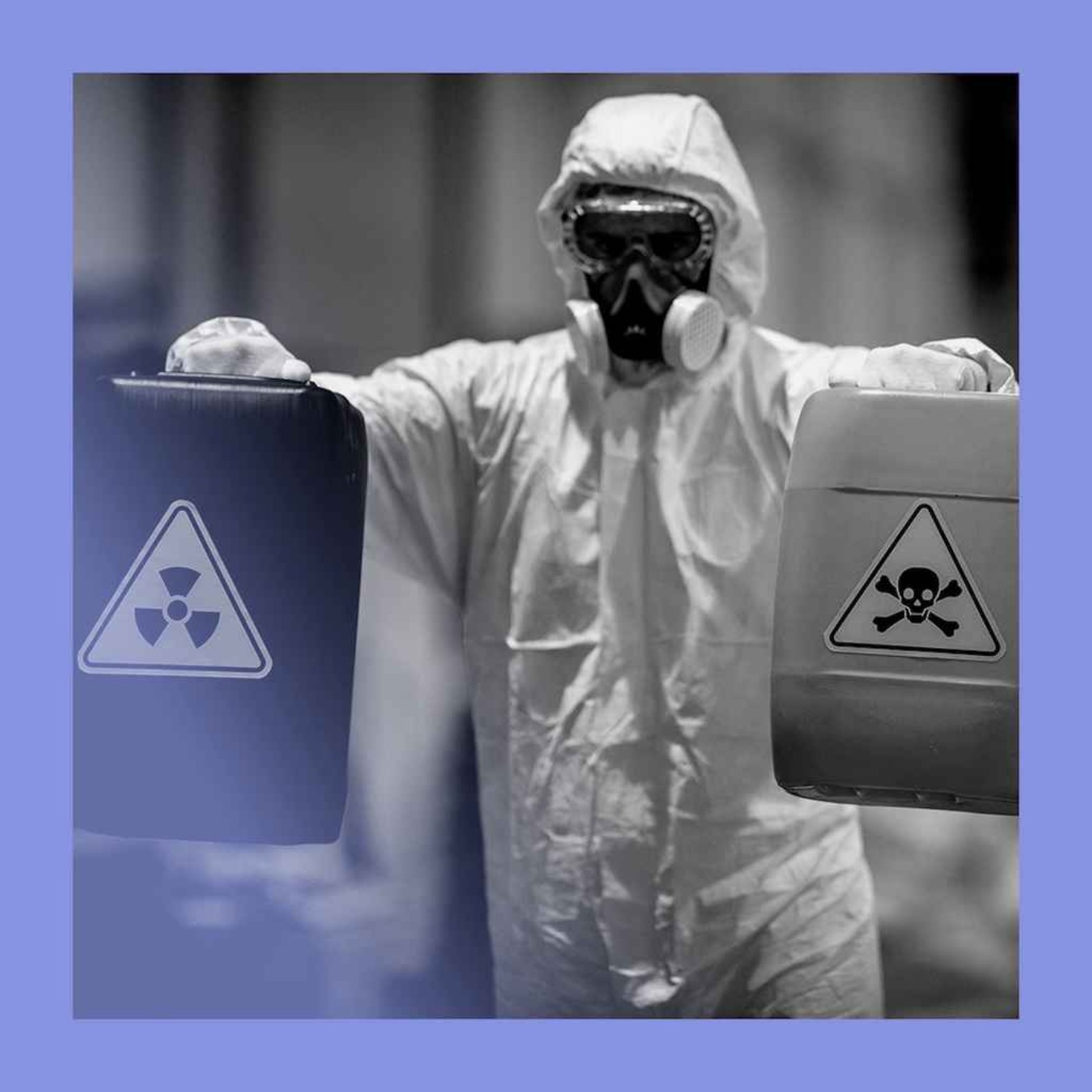
The belief that nature represents the ceiling of pathogen danger is false. Just as humans engineer materials stronger than any found in nature, AI can be used to design viruses that are far more transmissible or lethal than their natural counterparts.
Scientists have designed viruses for years, but AI's breakthrough is making the process thousands of times cheaper and faster. This accelerates positive biotech applications like gene therapy but also heightens biosecurity risks by lowering the barrier to entry for creating problematic agents.

Valthos CEO Kathleen, a biodefense expert, warns that AI's primary threat in biology is asymmetry. It drastically reduces the cost and expertise required to engineer a pathogen. The primary concern is no longer just sophisticated state-sponsored programs but small groups of graduate students with lab access, massively expanding the threat landscape.

Stanford scientists used a specialized AI to generate new, functional viruses. The key takeaway is that the AI itself is not the inherent risk; rather, the danger comes from human decisions. The lab chose not to use human pathogens in its training data, but future actors could easily make a more dangerous choice.

The focus on AGI can obscure more immediate threats. Even narrowly capable AI tools pose existential risks. For example, an AI that only excels at biotechnology research could make it easy for malicious actors to develop dangerous pathogens, regardless of its general intelligence.