Get your free personalized podcast brief
We scan new podcasts and send you the top 5 insights daily.
Traditional audit logs and screenshots are inadequate for AI agents. To ensure accountability, every agent needs a distinct, machine-readable identity, like a Decentralized Identifier (DID). All agent actions should be cryptographically signed and recorded in a tamper-evident ledger to create a trustworthy audit trail.

Related Insights
The defining characteristic of an enterprise AI agent isn't its intelligence, but its specific, auditable permissions to perform tasks. This reframes the challenge from managing AI 'thinking' to governing AI 'actions' through trackable access controls, similar to how traditional APIs are managed and monitored.

Simply giving an agent a user account is dangerous. An agent creator is liable for its actions, and the agent has no right to privacy. This requires a new identity and access management (IAM) paradigm, distinct from human user accounts, to manage liability and oversight.
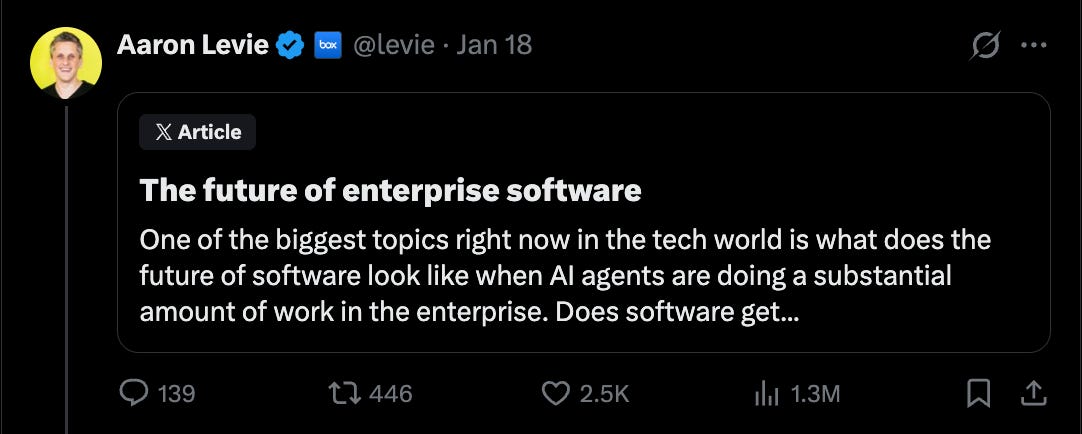
An AI agent cannot simply use a human's credentials. It requires its own identity, permissions, and access controls for security and traceability. This means SaaS companies will likely charge for agent seats, creating a significant new revenue stream.

As AI makes digital content and transactions nearly free to create, trust evaporates. Crypto primitives like blockchains offer a solution by providing verifiable identity, provenance (chain of custody), and reliable on-chain data, which is crucial for both humans and AI agents to operate safely.
As AI capabilities accelerate toward an "oracle that trends to a god," its actions will have serious consequences. A blockchain-based trust layer can provide verifiable, unchangeable records of AI interactions, establishing guardrails and a clear line of fault when things go wrong.

The rise of autonomous software agents like Cognition's "Devin" introduces a new, critical security layer: agent identity. Organizations must decide if agents have their own unique identities or inherit them from the deploying user. This is fundamental for creating auditable logs and securing their actions.

To combat AI-generated misinformation, we need decentralized, cryptographic truth systems, similar to Bitcoin's ledger. This allows anyone to verify facts independently, free from corporate paywalls or government control, creating a 'ledger of record' that proves what is real rather than just asserting it.
The goal for trustworthy AI isn't simply open-source code, but verifiability. This means having mathematical proof, like attestations from secure enclaves, that the code running on a server exactly matches the public, auditable code, ensuring no hidden manipulation.

Treat accountability as an engineering problem. Implement a system that logs every significant AI action, decision path, and triggering input. This creates an auditable, attributable record, ensuring that in the event of an incident, the 'why' can be traced without ambiguity, much like a flight recorder after a crash.

Instead of building complex new control layers for AI, the emerging best practice is to treat each agent as a separate entity. This means giving them their own accounts, API keys, and permissions, mirroring how you would onboard a new human employee to manage access and security.