Get your free personalized podcast brief
We scan new podcasts and send you the top 5 insights daily.
Teleport's decision to build a single identity layer for humans, machines, and workloads prepared them for the AI wave. This architecture became critical for containing non-deterministic AI agents, as enforcing security policies requires reasoning about all identity types simultaneously.

Related Insights
The defining characteristic of an enterprise AI agent isn't its intelligence, but its specific, auditable permissions to perform tasks. This reframes the challenge from managing AI 'thinking' to governing AI 'actions' through trackable access controls, similar to how traditional APIs are managed and monitored.

Simply giving an agent a user account is dangerous. An agent creator is liable for its actions, and the agent has no right to privacy. This requires a new identity and access management (IAM) paradigm, distinct from human user accounts, to manage liability and oversight.
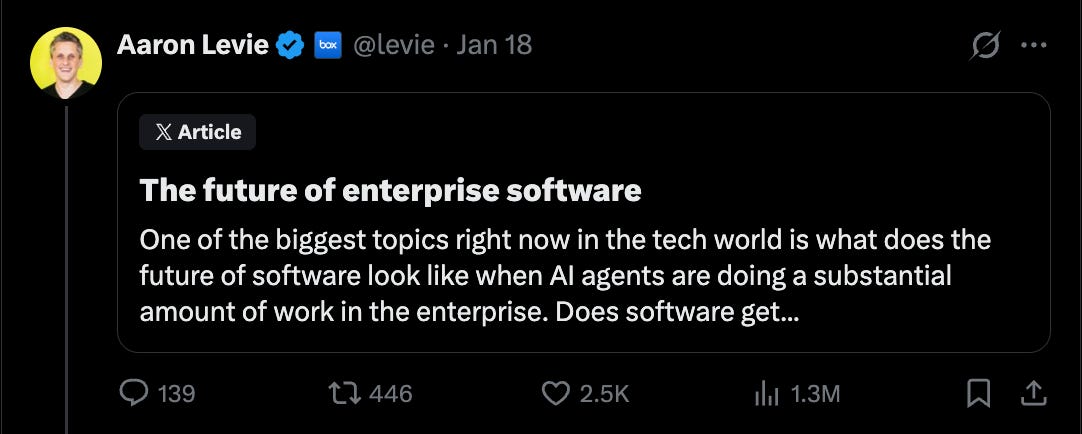
A key bottleneck preventing AI agents from performing meaningful tasks is the lack of secure access to user credentials. Companies like 1Password are building a foundational "trust layer" that allows users to authorize agents on-demand while maintaining end-to-end encryption. This secure credentialing infrastructure is a critical unlock for the entire agentic AI economy.

Traditional identity models like SAML and OAuth are insufficient for agents. Agent access must be hyper-ephemeral and contextual, granted dynamically based on a specific task. Instead of static roles, agents need temporary permissions to access specific resources only for the duration of an approved task.

Managing human identities is already complex, but the rise of AI agents communicating with systems will multiply this challenge exponentially. Organizations must prepare for managing thousands of "machine identities" with granular permissions, making robust identity management a critical prerequisite for the AI era.

Todd McKinnon conceptualizes AI agents not as simple tools but as a fundamentally new identity category. This identity possesses attributes of both a human user (roles, permissions) and a system (automation, being headless). This reframing is central to building the next generation of enterprise security and access management.
As autonomous agents become prevalent, they'll need a sandboxed environment to access, store, and collaborate on enterprise data. This core infrastructure must manage permissions, security, and governance, creating a new market opportunity for platforms that can serve as this trusted container.
The CEO of WorkOS describes AI agents as 'crazy hyperactive interns' that can access all systems and wreak havoc at machine speed. This makes agent-specific security—focusing on authentication, permissions, and safeguards against prompt injection—a massive and urgent challenge for the industry.
The rise of autonomous software agents like Cognition's "Devin" introduces a new, critical security layer: agent identity. Organizations must decide if agents have their own unique identities or inherit them from the deploying user. This is fundamental for creating auditable logs and securing their actions.

Instead of building complex new control layers for AI, the emerging best practice is to treat each agent as a separate entity. This means giving them their own accounts, API keys, and permissions, mirroring how you would onboard a new human employee to manage access and security.