Get your free personalized podcast brief
We scan new podcasts and send you the top 5 insights daily.
Instead of making artists obsolete, AI democratizes high-cost production. This empowers individual creators, making their unique taste and vision the key differentiator, rather than their ability to secure funding from traditional studios or capital aggregators.

Related Insights
As AI tools enable millions of amateur creators to produce professional-quality content, platforms like YouTube and Spotify become less reliant on a small number of mainstream media giants. This diffusion of content creation shifts bargaining power away from traditional studios and labels to the platforms themselves.
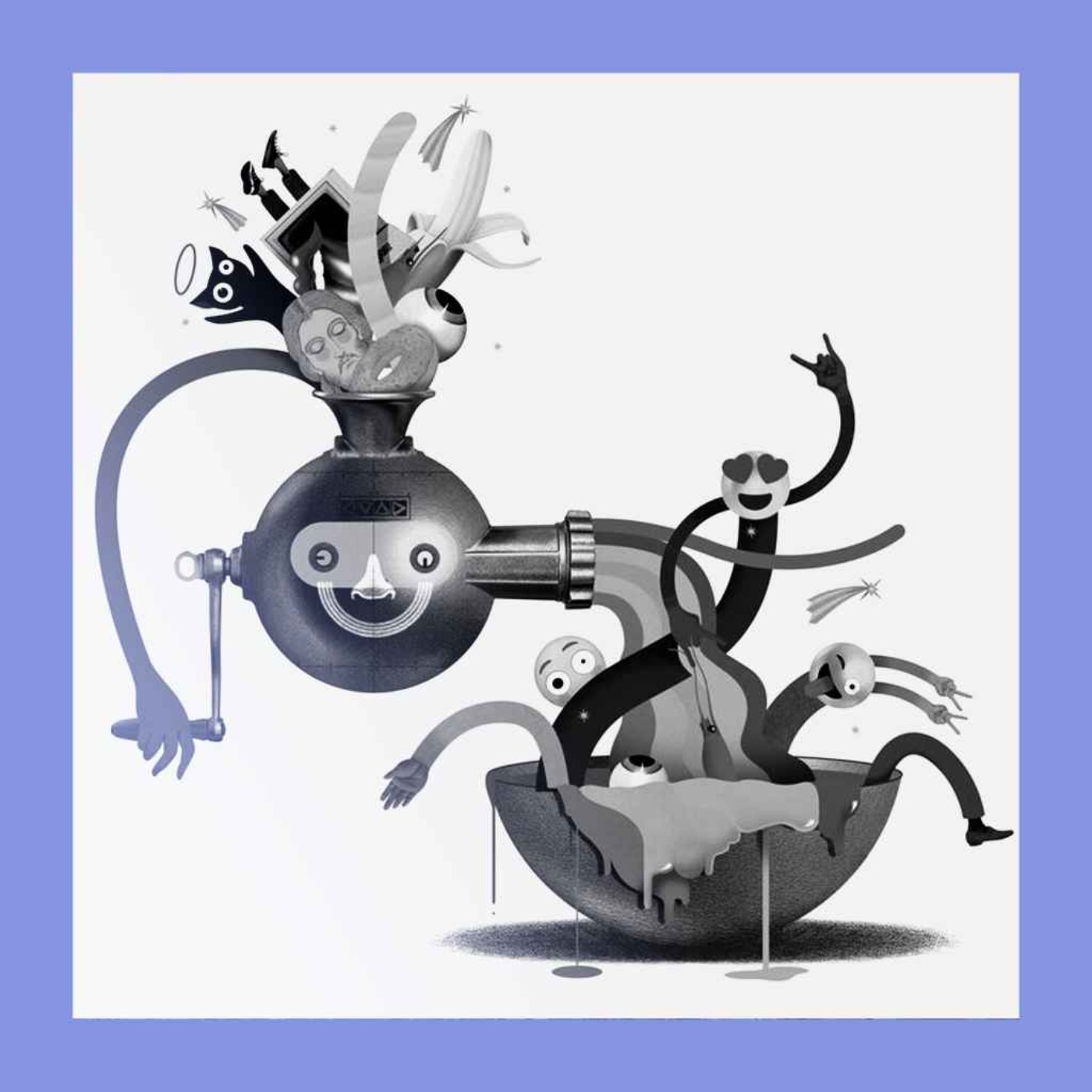
The fear that AI will replace top artists is misplaced. The correct framing is what happens when top talent gets AI tools. A director like Steven Spielberg could potentially increase their output 20-fold for a fraction of the cost, leading to a massive increase in high-quality creative work.

AI will empower creators by allowing them to translate ideas directly into finished products, bypassing traditional technical skill requirements like musical rhythm or film production. This shift will place a premium on raw creativity and vision over trained execution.

When every company has access to the same powerful AI tools, the competitive advantage is no longer budget or technology. The real differentiator becomes human taste, judgment, and the ability to apply a unique point of view to guide the AI, separating average, generic output from exceptional work.

Screenwriter Rhett Reese sees AI as a paradox: it's a terrifying threat to established creative jobs but also an exciting tool for new talent. AI will empower individuals without industry access or capital to produce high-quality work, breaking down traditional barriers and enabling a new generation of creators.

As AI democratizes the technical aspects of content creation, the ability to guide it with unique perspective, craft, and taste becomes the key differentiator. AI is a powerful tool for experts to scale their vision, but it cannot replace the vision itself.

While AI makes generic output easy, it amplifies the value of human taste and judgment. This transforms skilled workers into "artists" whose unique outputs are hard to replicate, giving them significant leverage in wage negotiations, much like professional athletes.
While AI lowers the barrier to content creation for everyone, it simultaneously increases the value of uniquely human contributions. As AI-generated content becomes commoditized, attributes like lived experience, distinct perspective, and true originality will become the key differentiators for creators.

As AI makes the creation of art "products" nearly free, the economic model for creators may shift away from selling individual units. Instead, a system of patronage, where communities directly fund artists they support, could become dominant again.

AI tools for creative production are becoming ubiquitous, leveling the playing field for execution. As production becomes a commodity, the strategic quality and originality of the core creative idea becomes the primary factor for success and differentiation.
