Get your free personalized podcast brief
We scan new podcasts and send you the top 5 insights daily.
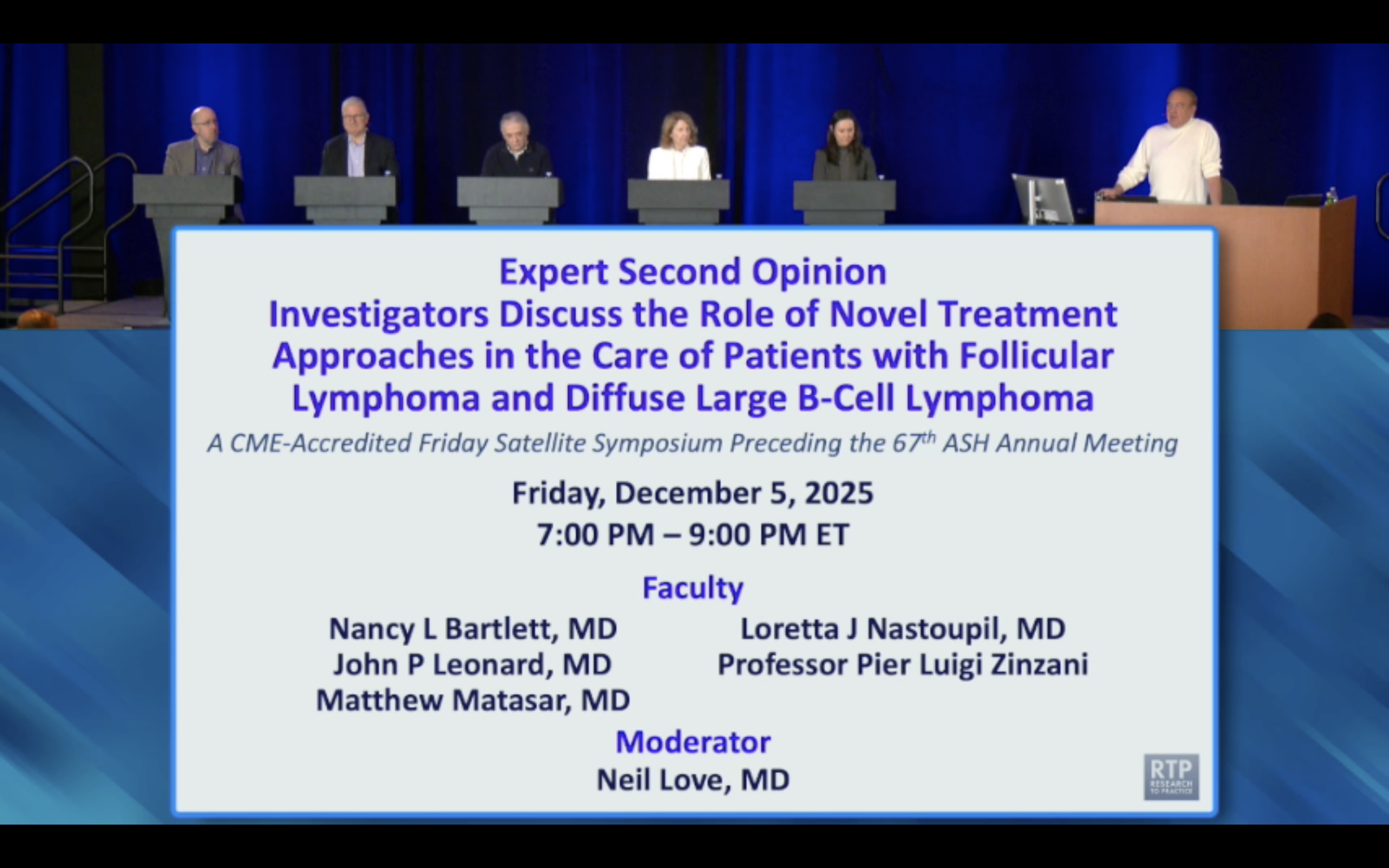
Despite new therapies for follicular lymphoma (FL), bendamustine-rituximab (BR) will likely remain the community standard due to its simplicity. This may create a growing gap in treatment approaches between academic centers using novel agents and community practices favoring the familiar BR regimen.
Related Insights
Non-covalent BTK inhibitors like pirtobrutinib are currently approved for use after covalent BTK inhibitors fail. Moving them to the frontline setting, as studied in BRUIN-313, disrupts the established treatment pathway and creates uncertainty for managing relapsed disease, as the standard 'next step' is removed.

Clinicians must weigh the immediate benefit of using community-accessible belantumab against the risk of reducing the efficacy of future BCMA-targeted therapies like CAR-T or bispecifics. This decision hinges on a patient's ability to travel and access advanced care, creating a complex treatment sequencing challenge.

A common assumption that older patients may prefer simpler, continuous medication regimens is often incorrect. Clinical experience shows that the vast majority of patients, regardless of age, are interested in a time-limited therapy option, provided it can be delivered conveniently without infusions.

In follicular lymphoma, the treatment goal is durable remission with manageable toxicity, not necessarily a cure. Therefore, clinicians frequently prefer using a bispecific antibody first, reserving the more complex and toxic CAR-T cell therapy for transformed disease or after a bispecific fails.
Developers often test novel agents in late-line settings because the control arm is weaker, increasing the statistical chance of success. However, this strategy may doom effective immunotherapies by testing them in biologically hostile, resistant tumors, masking their true potential.

The BRUIN-313 trial successfully compared pirtobrutinib to bendamustine-rituximab (BR). However, BR is no longer the frontline standard of care. This 'straw man' comparator makes it difficult to position pirtobrutinib against current preferred treatments like other BTK inhibitors or venetoclax regimens, limiting immediate clinical applicability.
In the AMPLITUDE trial, only 16% of high-risk metastatic prostate cancer patients received docetaxel, despite it being allowed and indicated by disease characteristics. This suggests a real-world "chemophobia" or physician bias towards newer targeted therapies, even within a clinical trial setting.
While many CLL patients prefer fixed-duration therapy to avoid continuous medication, this preference is often overridden by practical logistics. The burden of increased monitoring and frequent clinic visits associated with fixed-duration regimens leads some patients to opt for continuous therapy instead.

Recent non-inferiority trials affirm that fixed-duration combination therapies are viable alternatives to continuous BTK inhibitors. However, clinicians must look beyond the headline conclusion, as numerical data can show slightly worse progression-free survival for high-risk subgroups within the acceptable non-inferiority margin, complicating treatment decisions.
Clinicians are hesitant to use newer, potentially safer non-covalent BTK inhibitors before established covalent inhibitors. While it's known that non-covalents work after covalents fail, the reverse is unproven, creating a one-way treatment path that reserves these newer agents for later lines of therapy.