Get your free personalized podcast brief
We scan new podcasts and send you the top 5 insights daily.
The speaker abandoned the highly intelligent Claude model for months not due to its capabilities, but because its "annoying" and rambling conversational style created a frustrating user experience. This highlights that personality and interaction design are as critical as performance for user retention.

Related Insights
Beyond performance, employees are becoming attached to the perceived personality and conversational style of specific LLMs like Claude. This emotional connection creates a surprising form of user lock-in, making it difficult for leaders to switch to cheaper, functionally similar models.

When OpenAI deprecated GPT-4.0, users revolted not over performance but over losing a model with a preferred "personality." The backlash forced its reinstatement, revealing that emotional attachment and character are critical, previously underestimated factors for AI product adoption and retention, separate from state-of-the-art capabilities.

A model's raw intelligence is not enough for a great user experience. The default personality of GPT-5.5 is described as a "dull dull dollard," necessitating a manual adjustment to something more engaging. This highlights that interaction design remains critical, even for the most capable AI tools.
OpenAI's update to make its model "less cringe" shows the fight for consumer AI has shifted. As model performance reaches a "good enough" threshold for many users, the personality, tone, and overall user experience—the "vibes"—are becoming the critical differentiators for adoption and loyalty.
The personality of an AI is a crucial and underestimated feature. Karpathy notes that an agent like Claude, which feels like an enthusiastic teammate whose praise you want to earn, is more compelling than a dry, transactional tool. This emotional connection drives engagement.
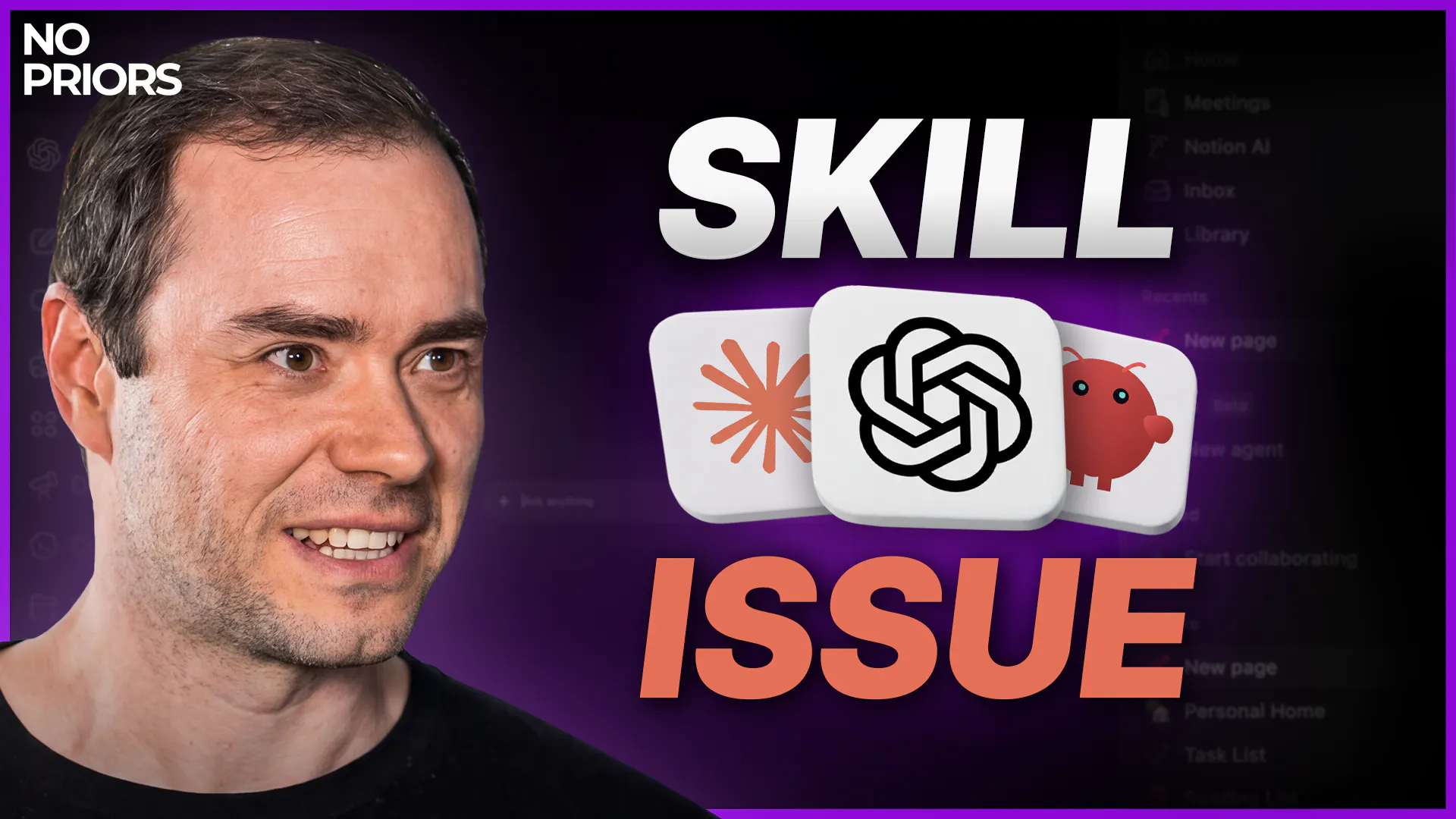
Despite outperforming top models like Fable 5 on key benchmarks, Claude Opus 5 is receiving poor qualitative feedback. Users describe it as 'frustrating,' 'argumentative,' and 'neurotic,' highlighting a growing disconnect between standardized tests and real-world usability for frontier AI models.
The speaker criticizes GrokBot's underlying model for having "bad vibes" and a generic personality. She highlights the importance of tuning an agent's voice and personality, especially in a multi-agent system, as this subjective, qualitative experience is a key driver for user engagement and preference.
Users in the OpenClaw community are reportedly choosing models like Claude Opus not for superior logic or lower cost, but because they prefer its 'personality.' This suggests that as models reach performance parity, subjective traits and fine-tuned interaction styles will become a critical competitive axis.
With top AI models reaching performance parity on tasks like coding, users are choosing platforms based on subjective factors like the model's "tone" and their accumulated history with it. This creates a new kind of brand loyalty and moat that isn't purely based on technical benchmarks.
Anthropic's Claude is gaining traction not just on technical benchmarks, but because users perceive it as having a "soul" and feeling "artisan." This indicates that for consumer AI, subjective qualities like personality, craft, and a non-robotic feel are becoming critical competitive advantages over pure utility.
