Get your free personalized podcast brief
We scan new podcasts and send you the top 5 insights daily.
The smooth exponential curve of compounding is a myth. In reality, it occurs in a world of shocks and uncertainty. True long-term compounding isn't just about picking winners; it's the result of having a robust process that allows you to survive the inevitable randomness and volatility along the way.
Related Insights
Success requires a paradoxical mindset: commit to a long-term vision (e.g., a decade) while being relentlessly consistent with daily actions. Compounding only works over long time horizons, so outlast competitors by sticking to the process for the 'thousand days' it takes to see exponential growth.

Compounding has positive asymmetry. A stock can only lose 100%, but it can gain multiples of that. This means a portfolio with one stock compounding at +26% and another at -26% doesn't break even over time; the winner's gains eventually dwarf the loser's total loss, leading to strong positive returns.
Some companies execute a 3-5 year plan and then revert to average returns. Others 'win by winning'—their success creates new opportunities and network effects, turning them into decade-long compounders that investors often sell too early.

While Buffett's 22% annual returns are impressive, his fortune is primarily a result of starting at age 11 and continuing into his 90s. Had he followed a typical career timeline (age 25 to 65), his net worth would be millions, not billions, demonstrating that time is the most powerful force in compounding.
Top tennis players like Rafael Nadal win only ~55% of total points but triumph by winning the *important* ones. This analogy illustrates that successful investing isn't about being right every time. It's about consistently tilting small odds in your favor across many bets, like a casino, to ensure long-term success.
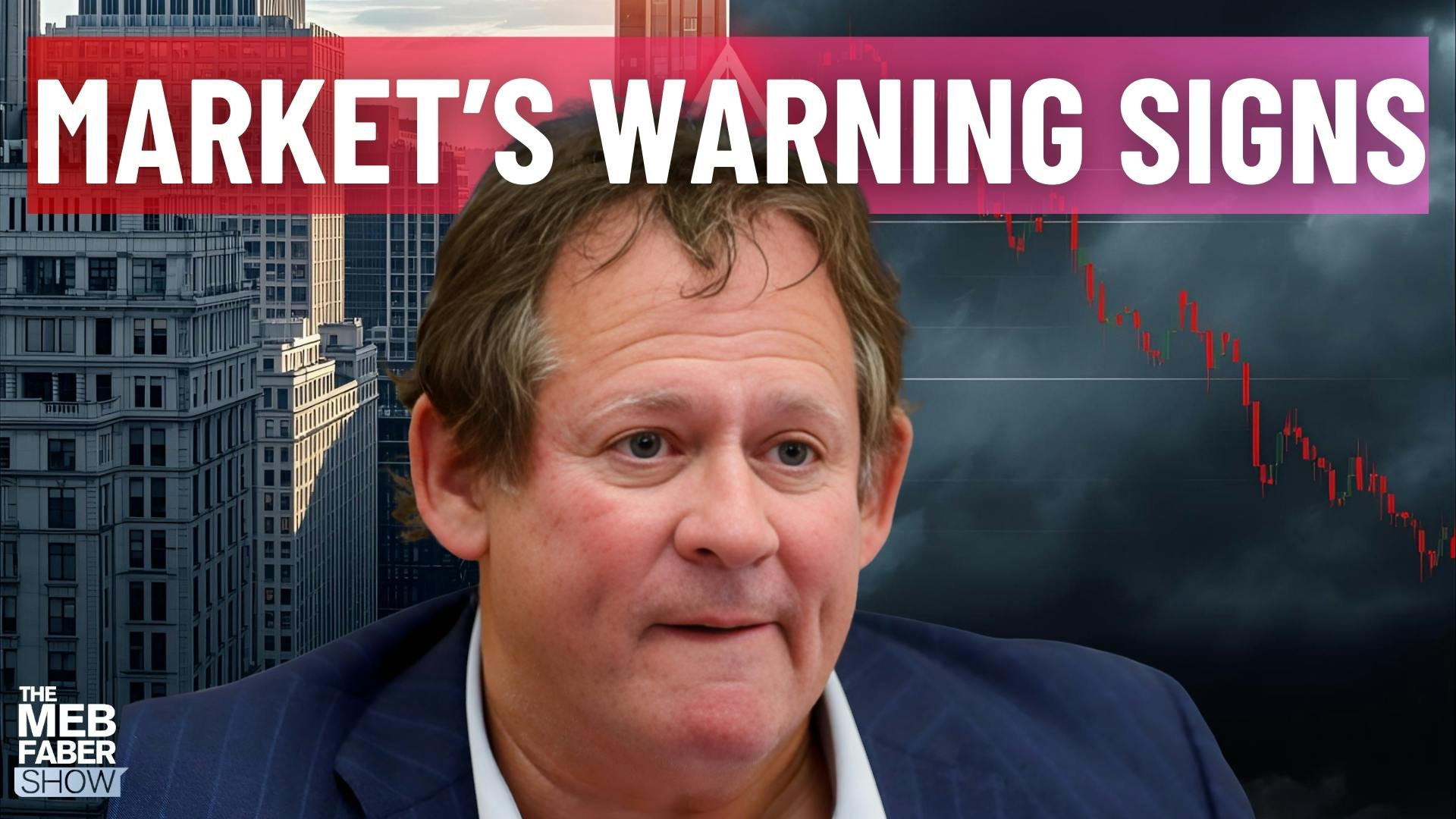
Conventional definitions of risk, like volatility, are flawed. True risk is an event you did not anticipate that forces you to abandon your strategy at a bad time. Foreseeable events, like a 50% market crash, are not risks but rather expected parts of the market cycle that a robust strategy should be built to withstand.
Rapid startup success stories are misleading. A company's quick victory is almost always the result of its founder's decade-long journey of grinding, learning, and failing. The compounding effect of skills, credibility, and network building is the true engine behind the breakthrough moment.

Timing is more critical than talent. An investor who beat the market by 5% annually from 1960-1980 made less than an investor who underperformed by 5% from 1980-2000. This illustrates how the macro environment and the starting point of an investment journey can have a far greater impact on absolute returns than individual stock-picking skill.

A 50% portfolio loss requires a 100% gain just to break even. The wealthy use low-volatility strategies to protect against massive downturns. By experiencing smaller losses (e.g., -10% vs. -40%), their portfolios recover faster and compound more effectively over the long term.

The secret to top-tier long-term results is not achieving the highest returns in any single year. Instead, it's about achieving average returns that can be sustained for an exceptionally long time. This "strategic mediocrity" allows compounding to work its magic, outperforming more volatile strategies over decades.