Get your free personalized podcast brief
We scan new podcasts and send you the top 5 insights daily.
As AI demand outstrips Earth's power supply, the industry is pursuing two strategies. Elon Musk is escaping the constraint by moving data centers to space. Everyone else must innovate on compute efficiency through new chip designs and model architectures to achieve 70-100x gains per token.

Related Insights
From a first-principles perspective, space is the ideal location for data centers. It offers free, constant solar power (6x more irradiance) and free cooling via radiators facing deep space. This eliminates the two biggest terrestrial constraints and costs, making it a profound long-term shift for AI infrastructure.
![Gavin Baker - Nvidia v. Google, Scaling Laws, and the Economics of AI - [Invest Like the Best, EP.451] thumbnail](https://megaphone.imgix.net/podcasts/d97fee14-d4d7-11f0-8951-8324b640c1c1/image/d3a8b5ecbf3957de5b91f278a191c9ff.jpg?ixlib=rails-4.3.1&max-w=3000&max-h=3000&fit=crop&auto=format,compress)
The biggest limiting factor for AI growth is energy production, which faces regulatory hurdles and physical limits on Earth. By moving data centers to space with solar power, Elon Musk aims to create an 'N of one' advantage, escaping terrestrial constraints to build a near-infinite compute infrastructure.
The two largest physical costs for AI data centers—power and cooling—are essentially free and unlimited in space. A satellite can receive constant, intense solar power without needing batteries and use the near-absolute zero of space for cost-free cooling. This fundamentally changes the economic and physical limits of large-scale computation.

The focus in AI has evolved from rapid software capability gains to the physical constraints of its adoption. The demand for compute power is expected to significantly outstrip supply, making infrastructure—not algorithms—the defining bottleneck for future growth.

The exponential growth of AI is fundamentally constrained by Earth's land, water, and power. By moving data centers to space, companies can access near-limitless solar energy and physical area, making off-planet compute a necessary step to overcome terrestrial bottlenecks and continue scaling.

Musk argues that by the end of 2024, the primary constraint for large-scale AI will no longer be the supply of chips, but the ability to find enough electricity to power them. He predicts chip production will outpace the energy grid's capacity, leaving valuable hardware idle and creating a new competitive front based on power generation.
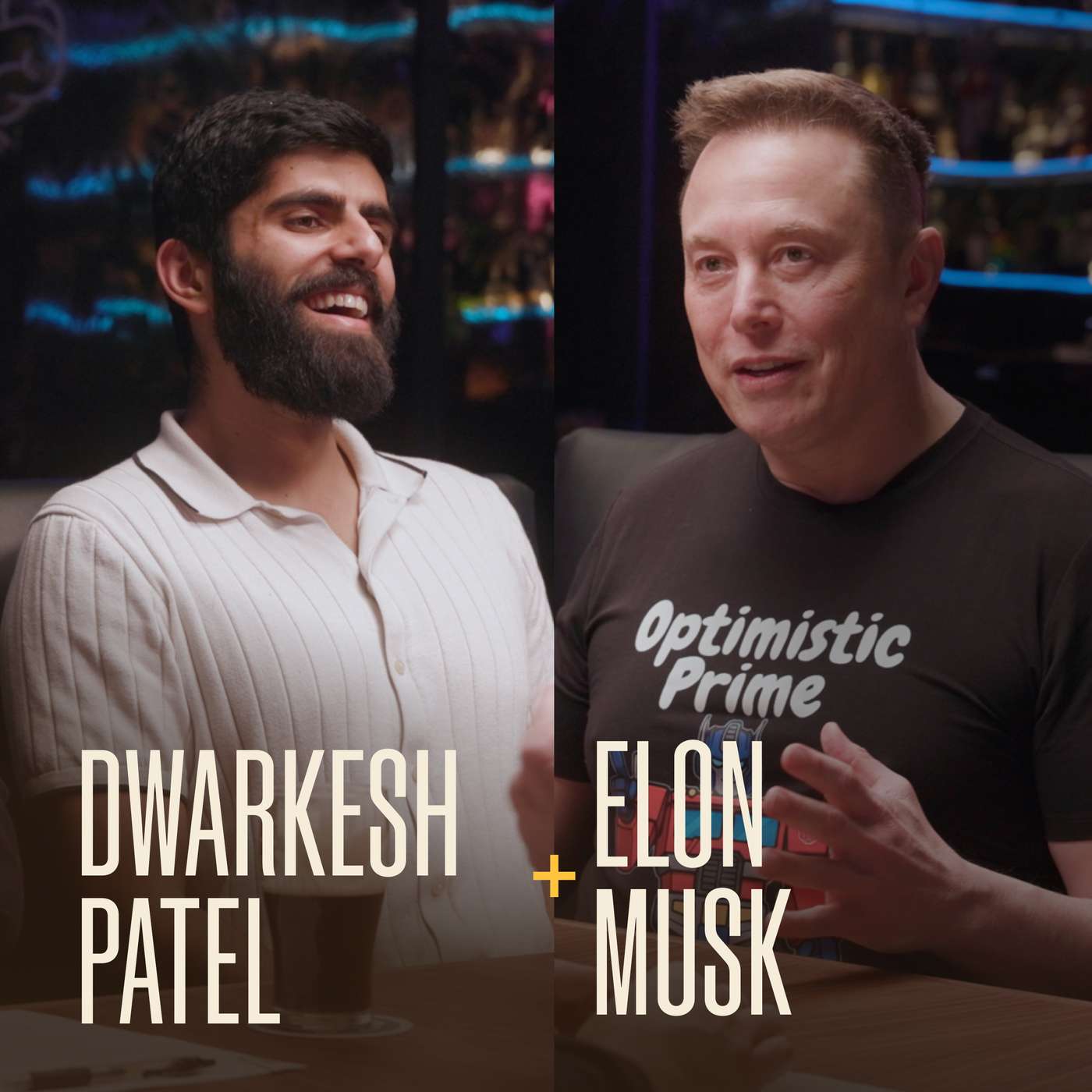
A key rationale for merging SpaceX and Elon Musk's XAI is to fund the development of data centers in orbit. The logic is that space provides free, extreme cooling and unlimited solar energy, solving two of the biggest cost and physical constraints of terrestrial AI infrastructure.

The astronomical power and cooling needs of AI are pushing major players like SpaceX, Amazon, and Google toward space-based data centers. These leverage constant, intense solar power and near-absolute zero temperatures for cooling, solving the biggest physical limitations of scaling AI on Earth.
As hyperscalers build massive new data centers for AI, the critical constraint is shifting from semiconductor supply to energy availability. The core challenge becomes sourcing enough power, raising new geopolitical and environmental questions that will define the next phase of the AI race.

Due to constant solar power (5x effectiveness, no batteries needed for nighttime) and avoiding terrestrial regulations, Musk predicts space will become the most economically compelling place for AI compute in less than 36 months.