Get your free personalized podcast brief
We scan new podcasts and send you the top 5 insights daily.
To pioneer neural machine translation, Prof. Kyunghyun Cho and his team deliberately limited their review of past research. They believed reading too much would impose false constraints from outdated contexts, preventing them from developing a system from scratch with fresh thinking.
Related Insights
The hypothesis for ImageNet—that computers could learn to "see" from vast visual data—was sparked by Dr. Li's reading of psychology research on how children learn. This demonstrates that radical innovation often emerges from the cross-pollination of ideas from seemingly unrelated fields.

Google's research head distinguishes between innovation—the continuous, iterative process of improvement applied across product and research—and true breakthroughs. Breakthroughs are fundamental shifts that solve problems not previously solvable in principle, such as the Transformer architecture that underpins modern AI.

Citing Leopold Ashenbrenner's essay, the hosts argue that AI progress isn't linear. It relies on "unhovelers"—fundamental scientific discoveries like new attention mechanisms that unlock massive, non-linear gains, defying simple extrapolation of current trends.
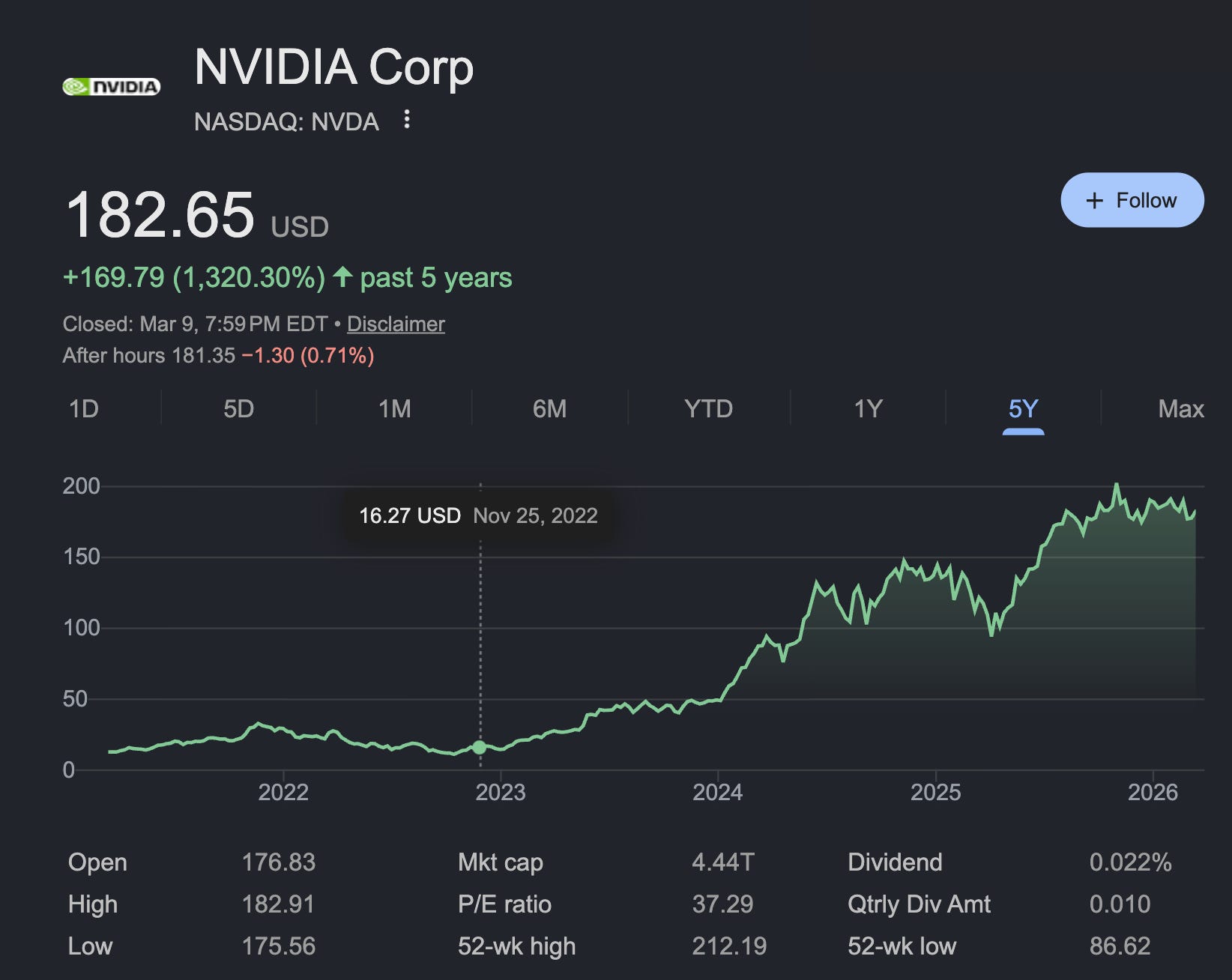
When OpenAI started, the AI research community measured progress via peer-reviewed papers. OpenAI's contrarian move was to pour millions into GPUs and large-scale engineering aimed at tangible results, a strategy criticized by academics but which ultimately led to their breakthrough.

Deep expertise in one AI sub-field, like model architectures, isn't a prerequisite for innovating in another, such as Reinforcement Learning. Fundamental research skills are universal and transferable, allowing experienced researchers to quickly contribute to new domains even with minimal background knowledge.

Prof. Kyunghyun Cho recounts that Yoshua Bengio pushed his lab toward machine translation not just for the task itself, but because it exhibited core AI challenges like handling variable-length sequences and vanishing gradients. Solving translation meant solving these deeper, more general problems.
The 2017 introduction of "transformers" revolutionized AI. Instead of being trained on the specific meaning of each word, models began learning the contextual relationships between words. This allowed AI to predict the next word in a sequence without needing a formal dictionary, leading to more generalist capabilities.

Cohere's CEO believes if Google had hidden the Transformer paper, another team would have created it within 18 months. Key ideas were already circulating in the research community, making the discovery a matter of synthesis whose time had come, rather than a singular stroke of genius.
A Minimax researcher explains that unlike academia, work at the industry's frontier involves problems so new that no literature exists. The job shifts from applying existing papers to deep, fundamental, first-principles thinking to find novel solutions for entirely unsolved challenges.

The foundational concept for modern LLMs, the attention mechanism, originated from an intern, Dima Badanao, in Yoshua Bengio's lab. The idea was so brilliant that its potential for success was immediately apparent upon explanation, before it was even coded.