Get your free personalized podcast brief
We scan new podcasts and send you the top 5 insights daily.
Shannon's mentor, Vannevar Bush, held a deep conviction that 'specialization is the death of genius.' He tested this by directing Shannon, an expert in engineering, to solve problems in genetics, a field he was completely unfamiliar with, with groundbreaking results.

Related Insights
After publishing his seminal paper, Shannon dedicated himself to building 'happily pointless' machines. These weren't hobbies but tangible explorations of his theories. He was building proofs for a future of sophisticated computing and AI, demonstrating possibilities when few others could even imagine them.
Nobel laureates are 22x more likely to have diverse hobbies, but this breadth is an advanced skill. The optimal path is to first specialize in a field to differentiate yourself. Only after achieving a level of mastery should you broaden your learning to connect disparate ideas and drive innovation.

The best career paths are now found at the intersection of two seemingly unrelated disciplines. This "bilingual" approach creates a unique perspective and value that cannot be easily replicated by others with traditional, siloed expertise, like a pediatric surgeon who is also a game developer.

Shannon's 'principle of indifference' was key to his genius. He insulated himself from scientific trends and external validation, allowing him to chase his own curiosity. He ignored critics and focused solely on problems that intrigued him, even if they seemed pointless to others.
Claude Shannon's indecisiveness about majoring in math or engineering inadvertently became his greatest strength. This dual training gave him a unique ability to blend abstract theory with practical application, a combination essential for his breakthroughs in information theory.
Shannon's work reinforces that major breakthroughs are not always the result of a direct, goal-oriented pursuit. Instead, he believed that following one's natural curiosity on seemingly simple or useless topics often leads to the most valuable and impactful discoveries.
The idea for a living computer came not from biologists, but from engineers with backgrounds in signal processing. This highlights how breakthrough innovations often occur at the intersection of disciplines, where outsiders can reframe a problem from a fresh perspective.

Figures like Henry Kaiser and Elon Musk don't confine themselves to one industry (e.g., roads or rockets). They view their core skill as engineering itself—a portable competence applicable to any complex physical problem, enabling them to jump into and dominate new fields.
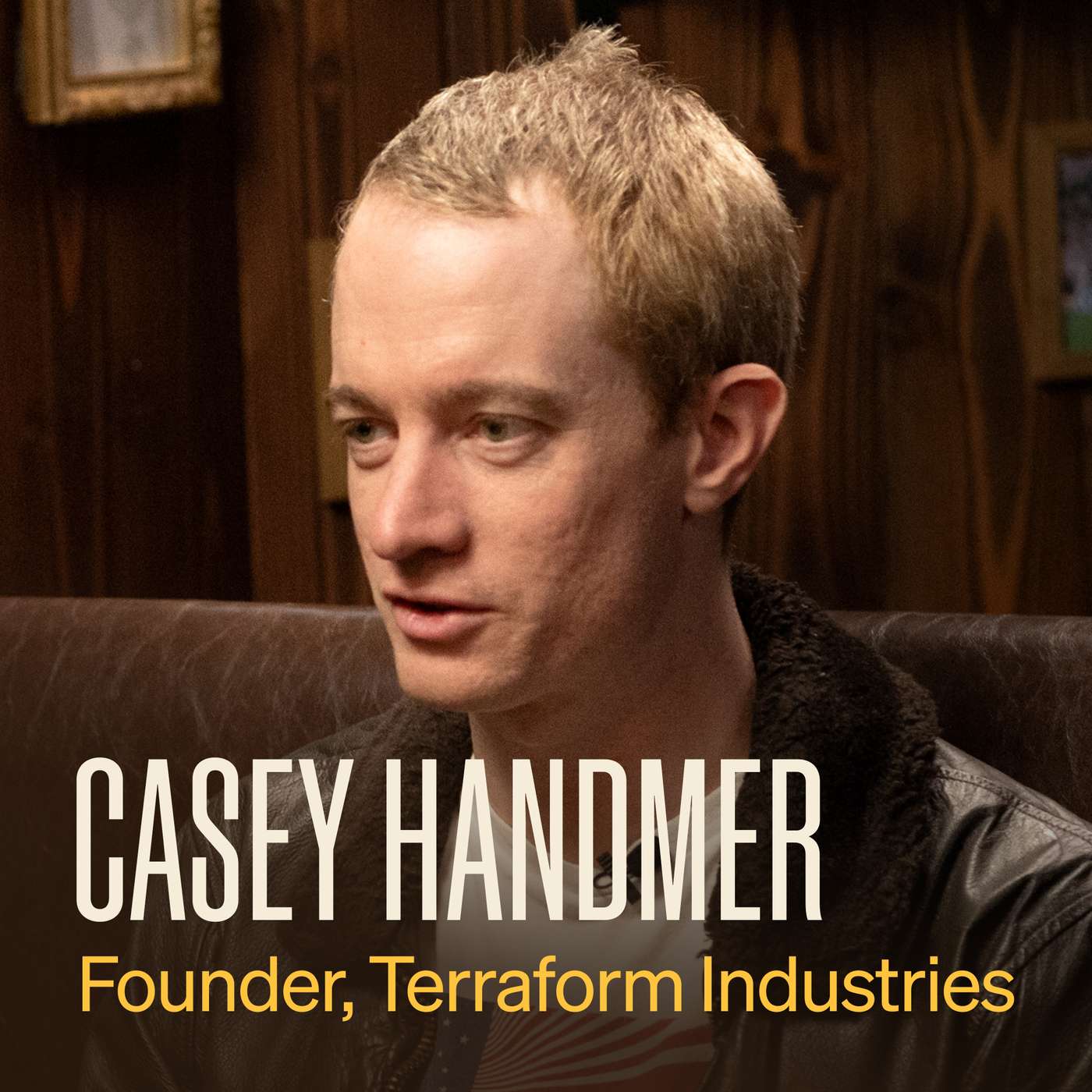
For cutting-edge AI problems, innate curiosity and learning speed ("velocity") are more important than existing domain knowledge. Echoing Karpathy, a candidate with a track record of diving deep into complex topics, regardless of field, will outperform a skilled but less-driven specialist.

In a rapidly changing world, the most valuable skill is not expertise in one domain, but the ability to learn itself. This generalist approach allows for innovative, first-principles thinking across different fields, whereas specialists can be constrained by existing frameworks.
