Get your free personalized podcast brief
We scan new podcasts and send you the top 5 insights daily.
The company's only profitable division is its satellite connectivity business. Projections show this segment will continue generating the vast majority of profits through 2030, effectively subsidizing the long-term, capital-intensive build-out of its AI and rocket divisions, which are not yet profitable.

Related Insights
Beyond rockets and Starlink, SpaceX's IPO is driven by the capital needed for its most ambitious goal: a fleet of space-based AI data centers. This venture is too expensive for private markets, forcing the public offering despite Elon Musk's previous reservations about short-termist investors.
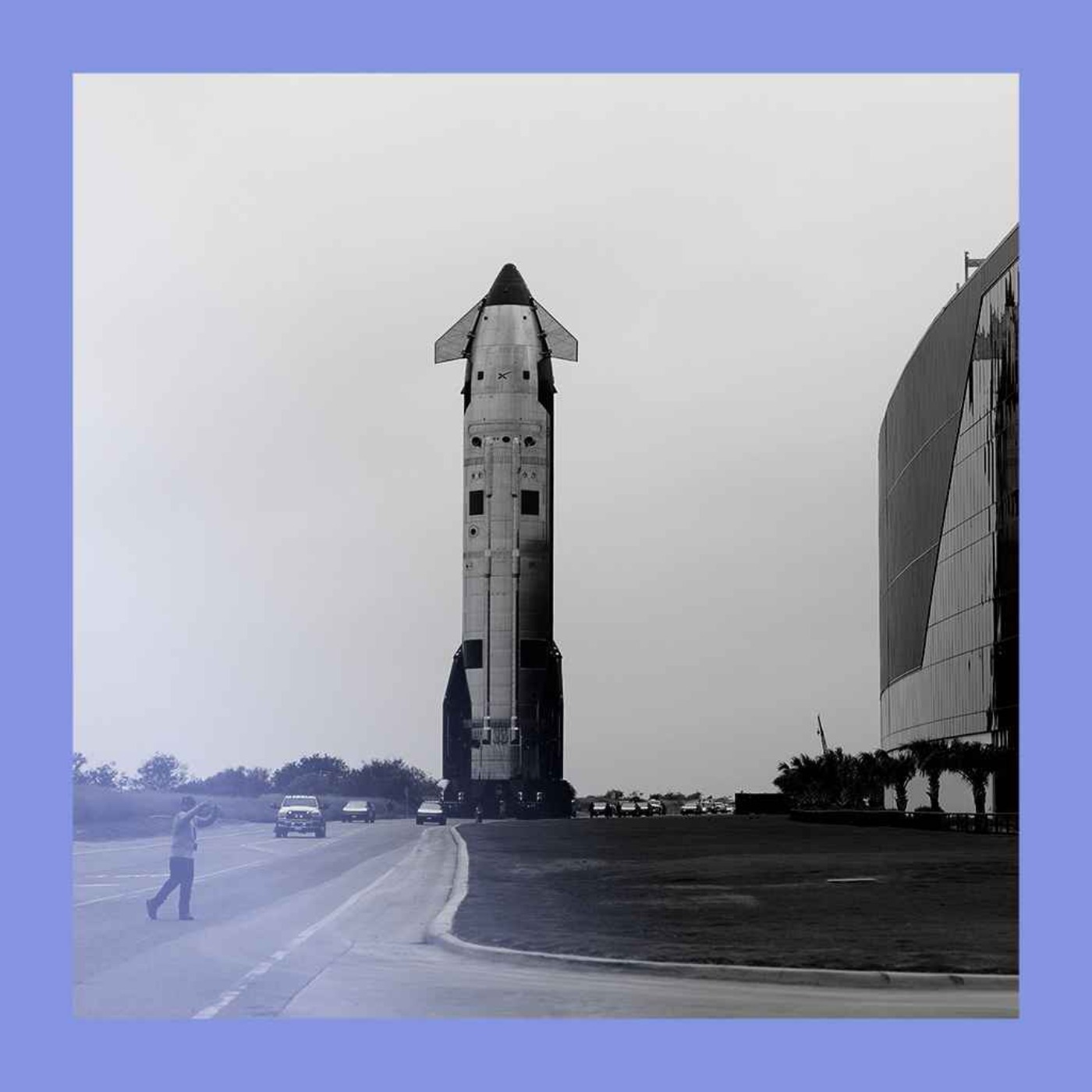
The grand proposal for a million-satellite orbital data center serves a dual purpose. It's not just about future technology; it's a strategic narrative play to convince potential IPO investors that SpaceX is a major player in the lucrative AI space, not merely a rocket and satellite internet company.

The Starlink satellite business is the financial engine of SpaceX, comprising 70% of its revenue. It boasts impressive software-like metrics, including over 50% CAGR revenue growth and EBITDA margins exceeding 50%. This high profitability in a hardware-intensive business is a key justification for its premium valuation.
By operating as both a leading AI model lab and a 'NeoCloud' provider, SpaceX uses a unique go-to-market strategy. It offsets massive GPU and training investments by selling compute capacity, effectively having customers fund its R&D—a model other companies cannot easily replicate.

SpaceX's upcoming IPO uses its highly profitable core space and telecom business, which generates $8B in EBITDA, to finance the capital-intensive and unproven xAI division. Investors are buying into the familiar Tesla model: funding future innovation with the cash flow of a dominant existing business.

The IPO filing shows SpaceX's capital spend on AI is 3x that on space. This represents a fundamental, eleventh-hour shift in its core identity from a space exploration company to an AI infrastructure powerhouse, leveraging its launch capabilities to enter a new, massive market.

Musk's promotion of orbital data centers is a strategic narrative to justify merging his capital-starved xAI into SpaceX. This allows him to fund his AI ambitions and compete with rivals like OpenAI, driven more by ego and a desire for attention than immediate technical feasibility.
SpaceX's spending on chips and data centers to power xAI is 50% more than the capital expenditure for its rocket and satellite divisions combined. This highlights a significant shift in deep tech, where the cost of computational infrastructure can now surpass that of complex, heavy industrial hardware.
SpaceX’s mastery of rocket launches, which reduced costs by over 50x, is not just a service they sell. It's a strategic advantage that enables their highly profitable, high-margin Starlink satellite internet business, creating a powerful, self-reinforcing flywheel where they are their own biggest customer.

SpaceX's IPO strategy bundles the highly profitable Starlink satellite internet service with cash-burning ventures like xAI, which lost $6.5B on $3.2B revenue. Investors are asked to pay a premium for a great business attached to what is described as a 'money furnace,' a risky bet on Elon Musk's vision.
