Get your free personalized podcast brief
We scan new podcasts and send you the top 5 insights daily.
Despite Asia's dominance in shipbuilding and shipping routes, the core financial infrastructure for maritime insurance remains concentrated in Western hubs like London and New York. Major global traders, including Asian firms, still primarily use P&I clubs and underwriters based in the UK, Scandinavia, and the US.

Related Insights
The American P&I Club was established in 1917 because the UK's "Trading with the Enemy Act" during WWI barred American ship owners, who were not yet in the war, from using London-based clubs. This geopolitical event forced the creation of a domestic maritime insurance mutual.
The next major growth wave in private credit will come from non-U.S. clients, particularly Asian insurers. These firms have only ~5% of their balance sheets in private credit, compared to 35-40% for their U.S. counterparts. Closing this gap represents a largely unpenetrated, significant opportunity.

Ship owners need separate insurance policies because the market is specialized. Mutual P&I clubs cover unpredictable third-party liabilities (e.g., pollution). Commercial underwriters handle asset-based risks like physical ship damage (hull & machinery) and war, which they can price more conventionally.
The 12 major P&I clubs, while competitors, form an "International Group" to collectively purchase one of the world's largest reinsurance policies. This layered pooling structure allows them to cover catastrophic events up to $8 billion per incident, a level unattainable by any single club.
The critical choke point of the Strait of Hormuz is closed not by military force, but by economics. Commercial shipping requires insurance, which is now either unavailable or prohibitively expensive for the region. Even with naval escorts, ships will not sail without coverage, making this an insurance-driven crisis.

Iran effectively weaponized the Strait of Hormuz not with mines, but by creating enough uncertainty to make UK-based insurance companies pull out. This demonstrates how financial systems can be leveraged as powerful geopolitical choke points.

Ship owners form P&I clubs to collectively insure against liabilities that commercial insurers find too volatile to price. These not-for-profit mutuals pool funds, providing at-cost insurance and sharing risk across the industry rather than transferring it to a third-party for profit.
P&I insurance premiums are calculated as a rate per ton, but the tonnage itself doesn't signify risk. The "rate" is the variable that reflects the vessel's specific risk profile (e.g., a cruise ship vs. a barge). Tonnage simply scales that risk-based rate to the vessel's size.
Despite most activity being in Asia, Standard Chartered remains headquartered in the UK. The CEO explains this provides access to sophisticated regulators for their complex business and avoids having to 'choose sides' between its largest competing hubs like Hong Kong and Singapore.
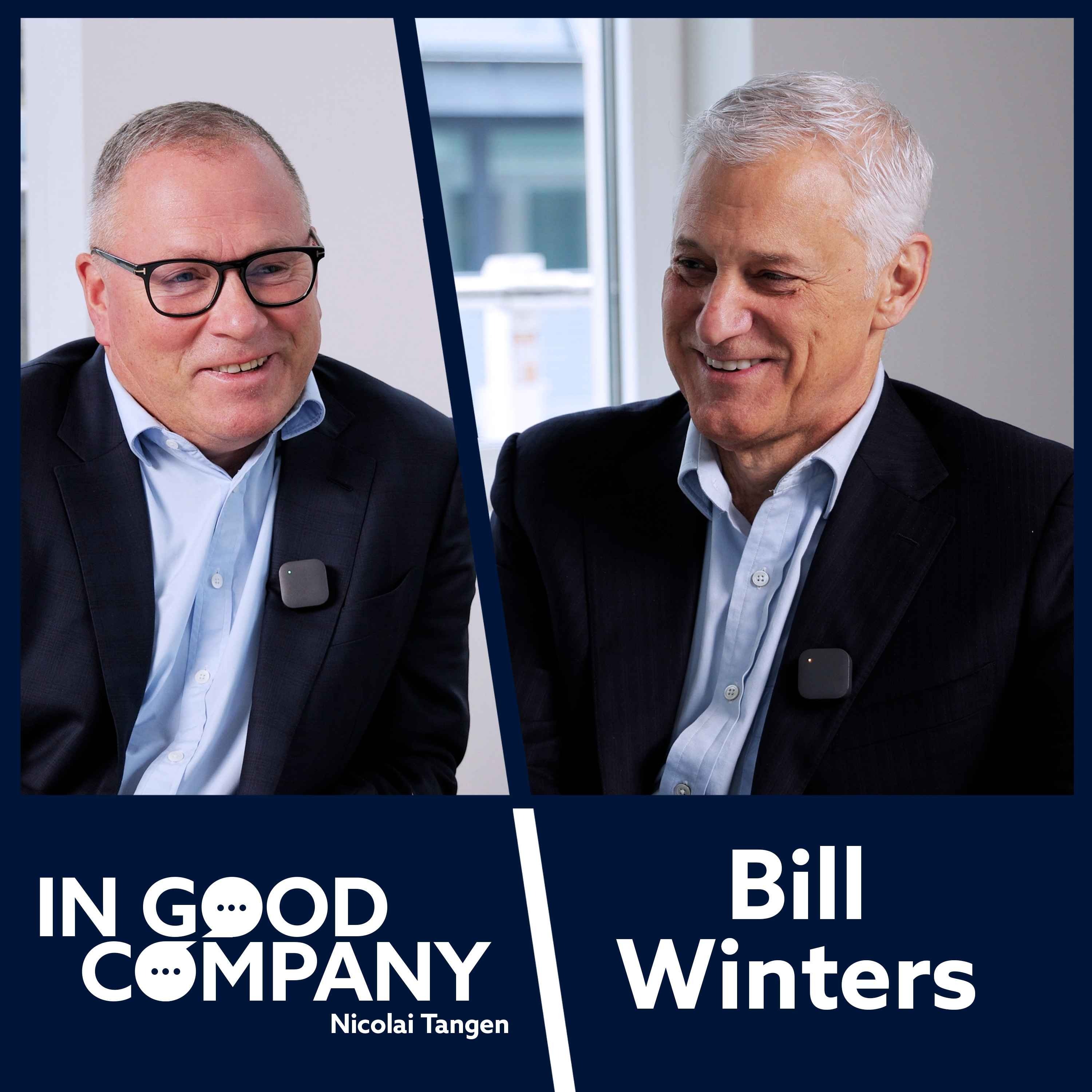
Insuring a sea voyage is not a single policy. It involves a complex ecosystem: the ship owner has Protection & Indemnity (P&I) insurance for the vessel, the cargo owner has 'all-risk' insurance for the goods, and the charterer may have liability insurance. This layered approach complicates claims and liability in a crisis.