Get your free personalized podcast brief
We scan new podcasts and send you the top 5 insights daily.
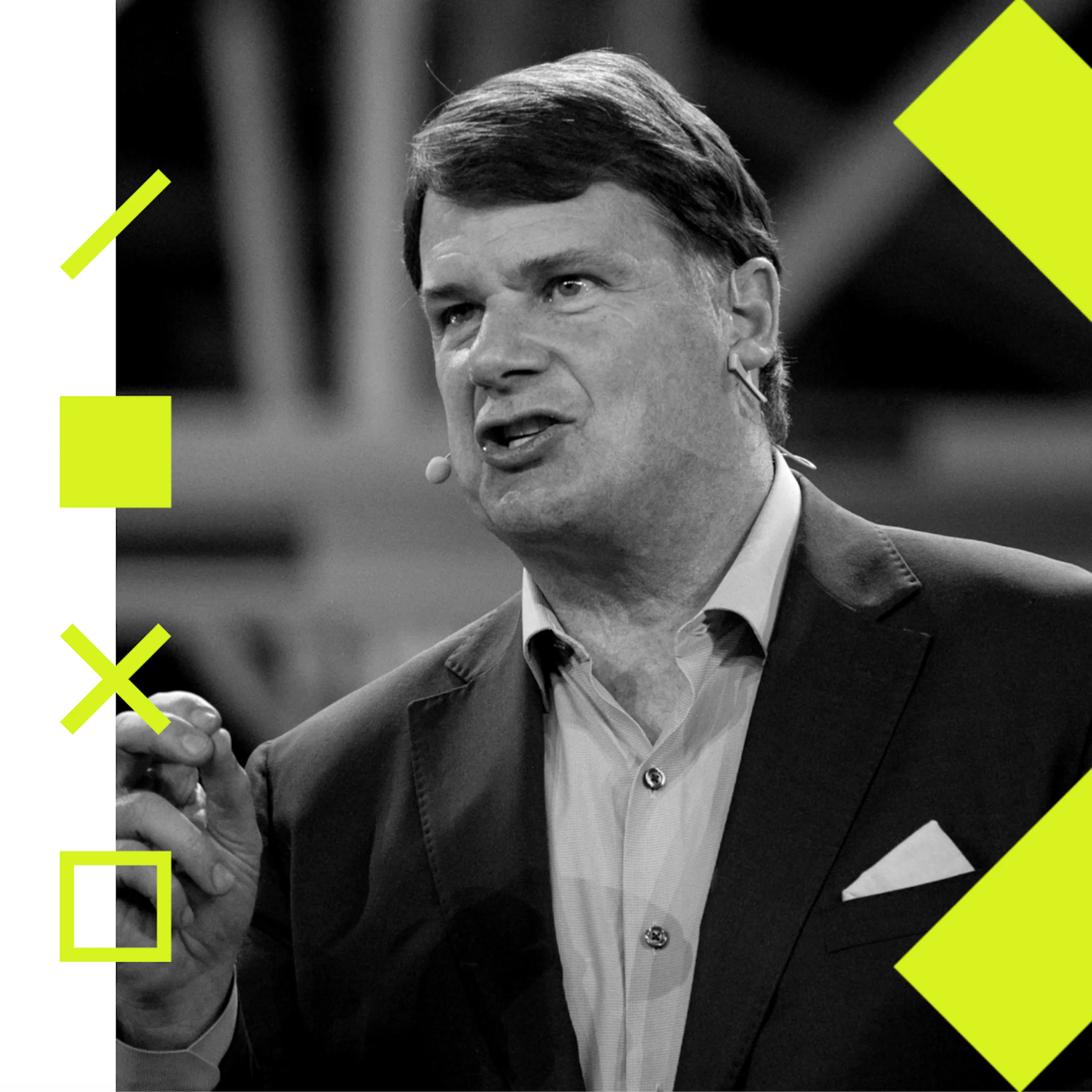
Ford's return to Formula One is a strategic technology play. CEO Jim Farley highlights the primary goal of transferring F1's advanced predictive failure analytics to Ford's commercial truck software service. This reframes a high-profile sponsorship as a critical R&D initiative for a profitable B2B software business.

Related Insights
F1 de-risks its key revenue streams—race promotion, media rights, and sponsorships—by locking in multi-year, fixed-term contracts. This provides revenue stability and visibility, hedging against economic downturns where ad budgets are often cut first.

In Formula 1, durable success comes from operational excellence, not sustainable strategic power. Clever rule interpretations or design innovations provide only a temporary edge before rivals copy them. Long-term dominance, like Mercedes' eight-year streak, is a result of superior competency in engineering, design, and execution rather than a defensible strategic moat.

McLaren treats its top-tier partners like members of an exclusive B2B ecosystem. Zak Brown calls a Grand Prix weekend "24 Davos from a business to business point of view," actively facilitating deals between synergistic partners like Google, Dell, and Cisco. The value extends far beyond simple brand exposure on the car.

BYD's exploration of entering Formula One is a marketing play to elevate its global brand perception and compete with established Western automakers. Success in a prestigious, European-dominated sport like F1 would serve as a powerful signal of engineering excellence and help accelerate its global expansion.

To compete with agile companies like BYD, Ford established an independent team, free from the company's legacy systems and processes, to develop a new, affordable EV platform. This radical approach was deemed necessary because incremental improvements on existing models would fail against formidable Chinese competition.
BYD's exploration of entering Formula One is part of a larger ambition to rebrand itself as a premium automaker. This high-profile move, along with launching luxury models, aims to capture the high-end market and shed its image as a maker of cheaper, mass-market EVs.

Ford's EV strategy isn't primarily benchmarked against Tesla, but against Chinese giants like BYD. CEO Jim Farley highlights their vertical integration, government subsidies, and focus on affordable technology as the formidable competitive threat that is shaping Ford's new platform and overall strategy.
Due to their extreme agility and constant week-over-week design changes, Formula One teams are the ultimate stress test for new engineering AI workflows. If a platform can meet their demands for speed and accuracy, it proves its viability for more traditional, slower-paced enterprise OEMs.

Jim Farley values the used car market as a primary leading indicator for consumer behavior. Because it's twice the size of the new market and features lower prices, it reveals unconstrained consumer preferences and trends before they fully manifest in new vehicle sales, providing a crucial edge for long-term product planning.
For B2B sponsors, the value of F1 is not just logo placement; it's the unparalleled hospitality. The global, weekend-long events serve as a "mobile executive briefing center" for building deep client relationships. Unlike a 3-hour game, an F1 weekend provides days of engagement in key business geographies, making it a powerful tool for enterprise sales and networking.