Get your free personalized podcast brief
We scan new podcasts and send you the top 5 insights daily.
Contrary to the popular belief that crypto is anonymous, CZ argues it is excessively transparent. The public nature of the blockchain, combined with KYC data from exchanges, makes it easy to track funds. This creates privacy vulnerabilities, such as exposing a company's entire payroll or an individual's physical location.

Related Insights
Institutions cannot expose their trading strategies or customer data on public blockchains. They view privacy not as a feature but as a 'non-negotiable' prerequisite. Until scalable, compliant privacy technologies are widely available, deep institutional engagement with DeFi will remain limited.

CZ believes not knowing Satoshi's identity is a net positive for Bitcoin. It prevents "founder centralization," a phenomenon seen in other projects like Ethereum, thus making Bitcoin more fundamentally decentralized and robust. The mystery is a feature to be preserved, not a bug to be solved.
In an AI-driven world where digital proof is paramount, Bitcoin's transparent ledger makes it ideal as provable collateral for institutions. This institutional focus leaves a gap for individual-focused money, a role Zcash is suited to fill with its emphasis on privacy, simplicity, and fungibility, akin to physical cash.

A complete shift of financial assets to blockchain is imminent. This won't happen on transparent chains like Ethereum, but on purpose-built networks like Canton. The key enabler is configurable privacy, a feature that allows financial institutions to transact without broadcasting their proprietary positions to the entire world.

For blockchain to be adopted by mainstream institutions, the "censorship-resistant" ethos of early crypto must evolve. Circle's ARK blockchain uses a known set of validators composed of major financial firms. This ensures high standards for compliance, security, and reliability that anonymous networks cannot provide.

Before launching its own exchange, CZ's company provided "exchange-as-a-service" software to 30 other exchanges. When the Chinese government shut down their clients in 2017, they were forced to pivot, using their existing technology to launch Binance.
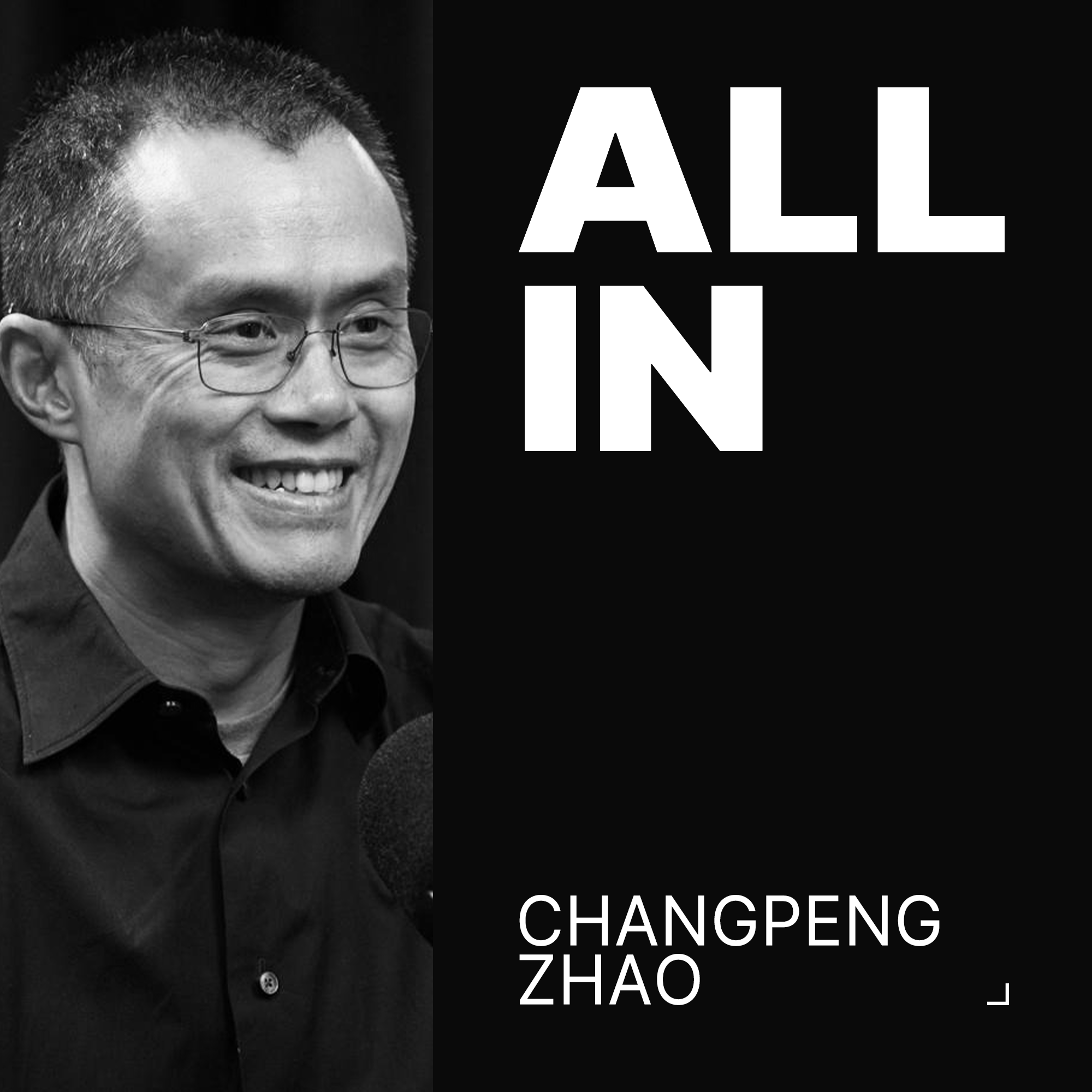
CZ explains the lack of anonymous founders by highlighting the immense difficulty of maintaining operational security (OpSec). In today's interconnected world, leaving no digital or physical trace is a monumental task. The fact that Satoshi succeeded makes his OpSec "crazy" and virtually impossible for new project founders to replicate.
CZ dismisses fears that quantum computing will break crypto. He argues that quantum advancements will concurrently lead to new, quantum-resistant encryption algorithms. The crypto ecosystem will simply need to upgrade its protocols to adopt these new standards, neutralizing the threat and potentially improving security.
While the early crypto market was dominated by cypherpunks advocating for anonymity, Coinbase took the opposite approach. They worked with banks and implemented KYC, betting that mainstream adoption required a compliant, trusted platform, even though it alienated the initial user base.

CZ suggests a primary use case for crypto will be as a payment rail for AI agents. AIs lack traditional identity documents needed for KYC in the banking system. Crypto offers a global, permissionless, and scalable payment network that can handle the high transaction volume AI will generate.