Get your free personalized podcast brief
We scan new podcasts and send you the top 5 insights daily.
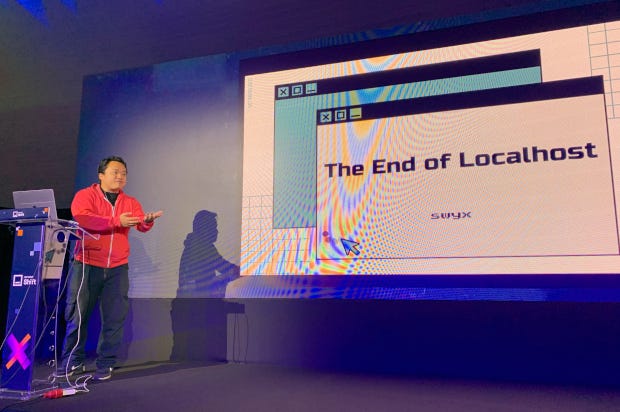
Cloudflare's CEO illustrates the massive computational overhead of AI agents. He calculates that running agents in traditional containers is unsustainable, necessitating a shift to more efficient architectures like 'isolates' to power the agent-driven future.

Related Insights
The industry is fixated on the GPU shortage, but the proliferation of AI agents will create massive demand for general-purpose compute, leading to a CPU bottleneck. As millions of agents perform tasks, the availability of CPU cores—not just specialized processors—will become the primary constraint on growth for compute providers.
While GPUs dominate AI hardware discussions, the proliferation of AI agents is causing a significant, often overlooked, CPU shortage. Agents rely on CPUs for web queries, data processing, and other tasks needed to feed GPUs, straining existing infrastructure and driving new demand for companies like Arm and Intel.

The shift from simple chatbots (one user request, one API call) to agentic AI systems will decouple inference requests from direct user actions. A single user request could trigger hundreds or thousands of automated model calls, leading to an exponential increase in compute demand and cost.
The focus on GPUs for AI overlooks a critical bottleneck: CPU shortages. AI agents require massive CPU power for non-GPU tasks like web queries and data prep. This demand is straining existing infrastructure and creating new market opportunities for CPU makers like ARM.
The focus on GPUs for AI overlooks a critical bottleneck: a growing CPU shortage. AI agents rely heavily on CPUs for orchestration tasks like tool calls, database queries, and web searches. This hidden demand is causing hyperscalers to lock in multi-year CPU supply contracts.
The shift from simple query-based AI to agentic AI, where AI calls itself recursively to solve complex tasks, increases compute demand by orders of magnitude. Most people, especially non-coders, fail to grasp this exponential shift, leading them to consistently underestimate the scale and duration of the AI infrastructure build-out.

The next wave of AI adoption involves 'agentic' workflows, where AI performs complex tasks autonomously. This shift from simple queries to agentic use is expected to increase token consumption by approximately 10x per task. This will drive a massive explosion in compute demand across all knowledge-work industries, not just coding.

The largest driver of future energy consumption for AI won't be human-initiated queries on chatbots. Instead, it will be the massive, continuous "machine-to-machine" traffic generated by autonomous AI agents performing tasks, which will ultimately swamp human-AI interaction and create a runaway demand for compute power.

The transition from chatbots to autonomous 'agentic' AI represents a fundamental step-change. These agents, which execute complex tasks independently, have already increased the demand for computational power by 1000x, creating a massive, ongoing need for new infrastructure and hardware.

While GPUs get the headlines, AI expert Tae Kim warns of a major coming CPU shortage. The complex orchestration, tool calls, and database queries required by AI agents are creating huge demand for CPU cores, a trend confirmed by major chipmakers and hyperscalers.