Get your free personalized podcast brief
We scan new podcasts and send you the top 5 insights daily.
The company's long-term plan is to handle drug development through to a successful New Drug Application (NDA) filing, then partner with a larger pharmaceutical company for marketing and sales. By deliberately avoiding the need to build a commercial sales force, they maintain focus on their core competency: drug development and clinical execution.

Related Insights
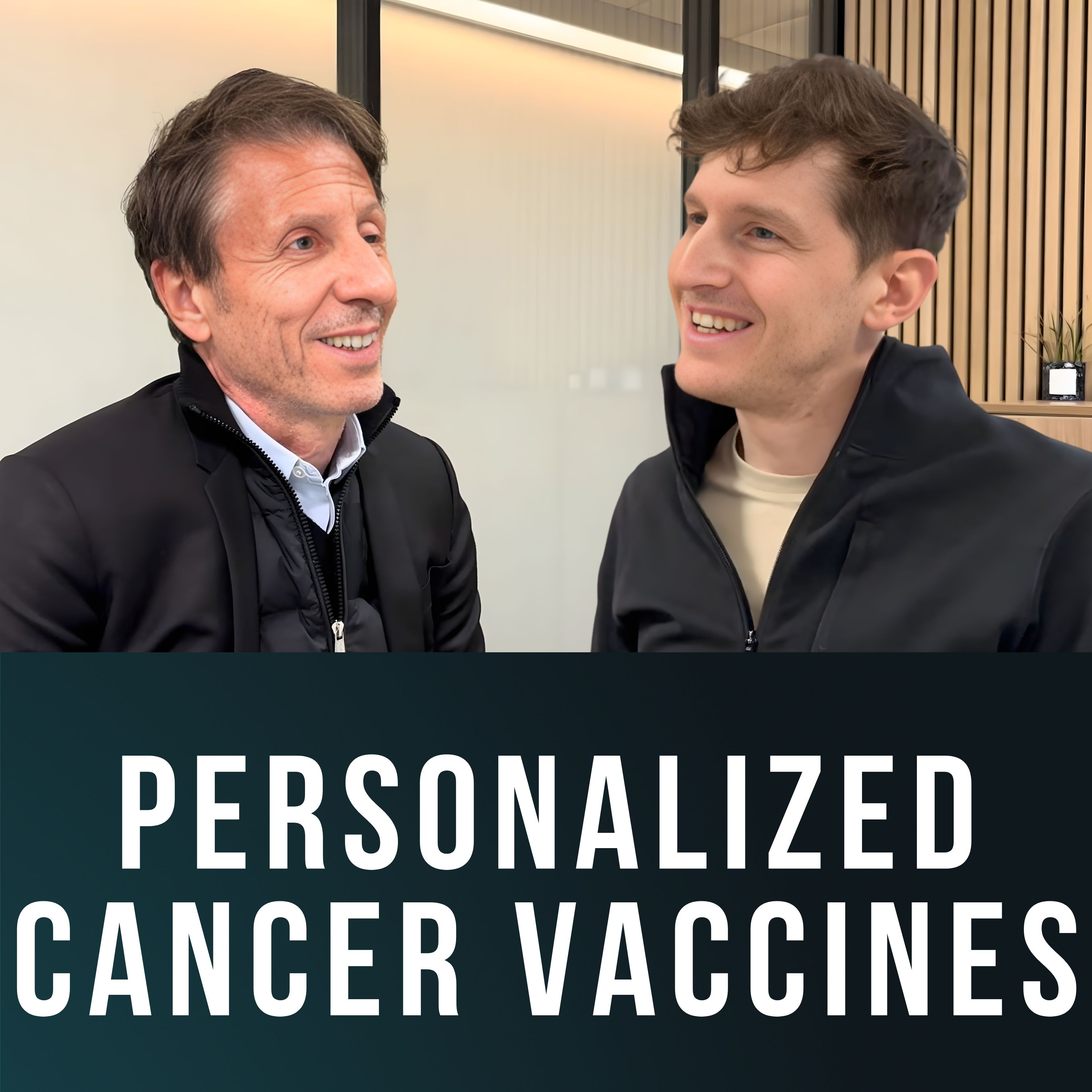
While the CEO of Transgene aspires to launch their product independently in Europe, he acknowledges the immense cost of a Phase 3 trial. A partnership with a large pharmaceutical company is viewed as the most realistic "best case scenario" to accelerate development and de-risk the final, most expensive stage.
Alt-Pep sees its core strength as early-stage science and development across a portfolio of amyloid diseases. The company's long-term plan is to focus on this R&D engine and partner with big pharma for late-stage development and commercialization, rather than building its own sales and marketing infrastructure.

The old assumption that small biotechs struggle with commercialization ("short the launch") is fading. Acquirers now target companies like Verona and Intracellular that have already built successful sales operations. This de-risks the acquisition by proving the drug's market viability before the deal, signaling a maturation of the biotech sector.
For years, Actuate's CEO has shared progress with large pharma companies, not just for early deal-making, but to get critical feedback on their development plan. This helps them understand what data potential acquirers need to see to make a compelling offer later.

The CEO highlights Merck's acquisition of Verona Pharma and a GSK licensing deal—both for nebulized COPD therapies—as key market signals. These large transactions validated big pharma's interest in the niche, creating momentum and investor confidence that directly benefited AeroRx's own successful Series A fundraising efforts, de-risking their investment thesis for new backers.
Neurix's deals with Sanofi and Gilead involve the partner funding early development through human proof-of-concept, minimizing Neurix's upfront financial risk. Crucially, the deal structure allows Neurix to "opt-in" for a 50/50 profit share in the U.S. later, retaining significant upside on successful programs.

When seeking partnerships, biotechs should structure their narrative around three core questions pharma asks: What is the modality? How does the mechanism work? And most importantly, why is this the best differentiated approach to solve a specific clinical challenge and fit into the competitive landscape?

AeroRx's core innovation is a new delivery system for existing drugs. While five dual-bronchodilators are available in handheld inhalers, none exist for nebulization. This targets older, sicker COPD patients who cannot use inhalers effectively, proving value can be created by improving *how* a drug is administered rather than discovering a new active ingredient.
AeroRx is described as "Elevation Pharma 2.0," the CEO's previous successful company. The strategy is to develop a nebulized bronchodilator for COPD, but updating the product from a single to a dual-agent therapy to match the modern standard of care. This approach leverages proven experience while targeting a clear market evolution, minimizing risk.
AeroRx achieved major clinical milestones—finalizing formulation, a Phase 1 study, and a Phase 2a proof-of-concept trial—on just $6.5M. This capital efficiency was possible because they combined well-understood, de-risked molecules. This allowed them to focus resources on the novel formulation and clinical execution rather than expensive, high-risk basic research.