Get your free personalized podcast brief
We scan new podcasts and send you the top 5 insights daily.
The most transformative application of AI could be in education, by making one-on-one tutoring universally accessible. This method, known as Bloom's 2 sigma effect, is proven to be incredibly effective but has been historically impossible to scale due to human limitations. AI can finally deliver this for every student.

Related Insights
Learners demand hands-on experience. The next evolution of training involves AI agents that act as sidekicks, not just explaining concepts but also taking over the user's screen to demonstrate precisely how to perform a task, dramatically accelerating skill acquisition and reducing friction.

People focus on what AI can do *for* them, but a greater opportunity is what AI can teach them. For the first time, everyone has access to a patient, expert tutor. Professionals should spend their spare time asking an AI to train them in new domains, from coding to product management.

By leveraging AI for deep research, outlining, and even slide creation, small teams can now create vast amounts of specialized educational content at a velocity that was previously impossible, enabling scalable, hyper-niche course offerings.
The next evolution in AI-driven education isn't just personalizing pace, but reframing entire subjects through a student's unique passions. For example, an AI could teach physics principles using football analogies for a sports-loving child, making abstract concepts more relatable and memorable than a one-size-fits-all curriculum.

While transformations feel bespoke, AI makes them productizable. AI is effective at scalable coaching and counseling, providing customized tips and guidance between human interactions. This allows companies to deliver personalized transformation journeys without infinite human capital, especially in the crucial 'follow-through' stage.

Historically, one-on-one tutoring—proven to boost student outcomes by two standard deviations (the "Bloom Two Sigma effect")—was reserved for the elite. AI now makes this highly effective, personalized educational model scalable and accessible to all.

An AI education system deployed to millions of students will continuously analyze patterns in their learning. Insights from a student in one country will instantly update the teaching algorithm for another, creating a massively scalable, personalized, and ever-improving educational model.

While AI systems can deliver personalized instruction more efficiently than humans, they cannot replicate the uniquely human role of a teacher. The most impactful teachers are remembered not for the curriculum they taught, but for the belief, purpose, and inspiration they instilled in students.

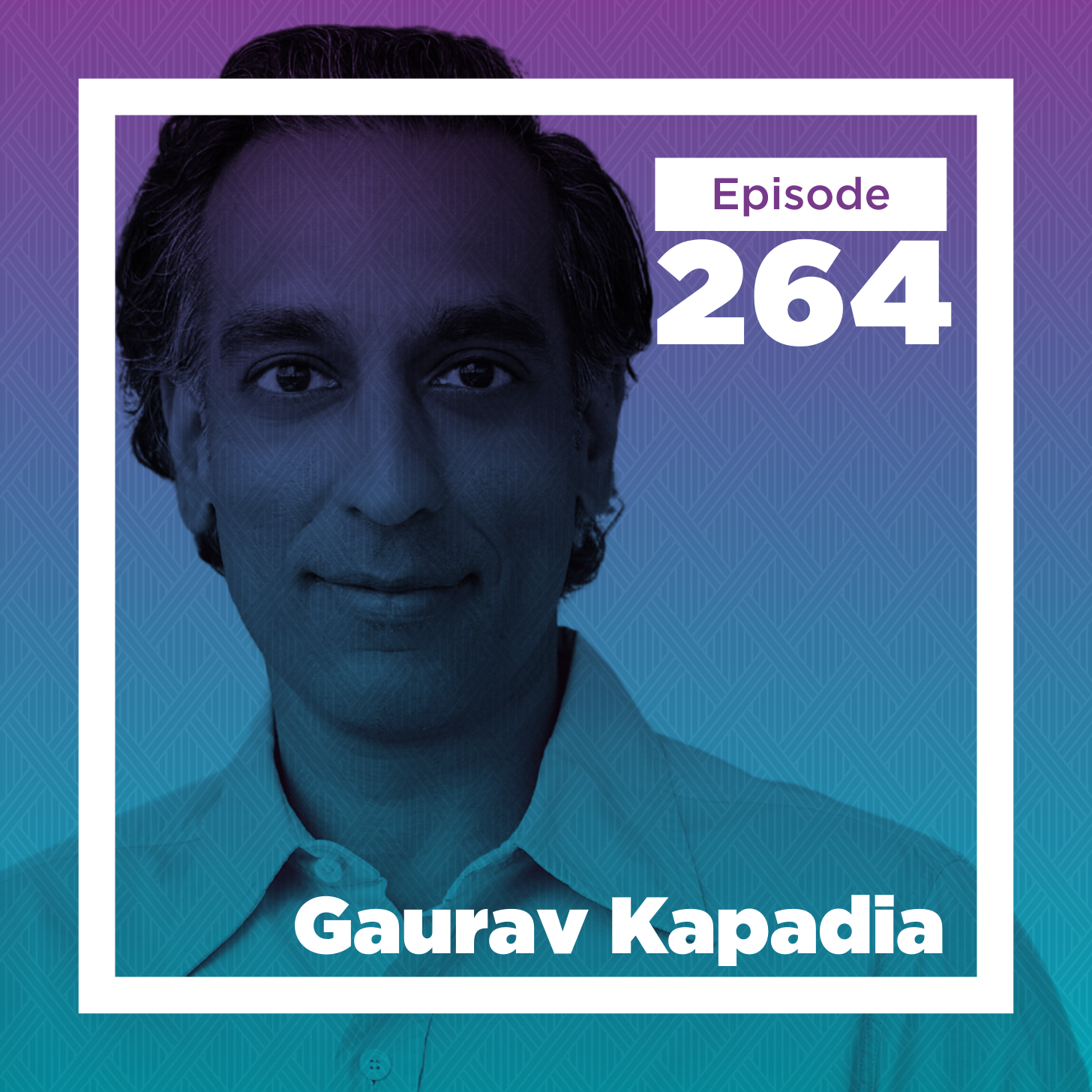
Investor Gaurav Kapadia uses AI as a knowledge augmenter to go deep on new subjects. Where he once hired university master's students to create custom curricula on topics like art history or Shakespeare, he now uses AI as his 'first port of call' for in-depth, personalized learning.
Instead of allowing AI to atrophy critical thinking by providing instant answers, leverage its "guided learning" capabilities. These features teach the process of solving a problem rather than just giving the solution, turning AI into a Socratic mentor that can accelerate learning and problem-solving abilities.