Get your free personalized podcast brief
We scan new podcasts and send you the top 5 insights daily.
Top AI providers see 80% of revenue from 1% of customers, a power law uncommon in SaaS. This distribution mirrors the revenue of top US companies, suggesting large enterprises treat AI spend as a core operational cost proportional to their total revenue, not a typical per-seat software expense.

Related Insights
While AI spend is the fastest-growing category ever observed in Ramp's data (up 15x since Jan 2025), its absolute impact on budgets remains minimal. For the top 25% of AI-spending firms, it constitutes only 2% of total business spend (excluding payroll), indicating massive runway for future growth despite current headlines.

While the cost per AI query drops, companies find more complex, compute-intensive uses for it. This elasticity of demand means total AI spending becomes a significant and variable operational expense, similar to a utility bill, rather than a predictable software cost.

The key to explosive AI revenue growth is shifting from per-seat SaaS models to monetizing inference. This "inference waterfall" creates a usage-based revenue stream that removes growth ceilings, enabling companies to scale at unprecedented rates by capturing value directly tied to AI consumption.

While overall enterprise software spending is hitting record highs, this growth is not a rising tide for all. Half the increase is consumed by existing vendors' price hikes and 30% is allocated to new AI initiatives, leaving minimal budget for traditional SaaS tools.
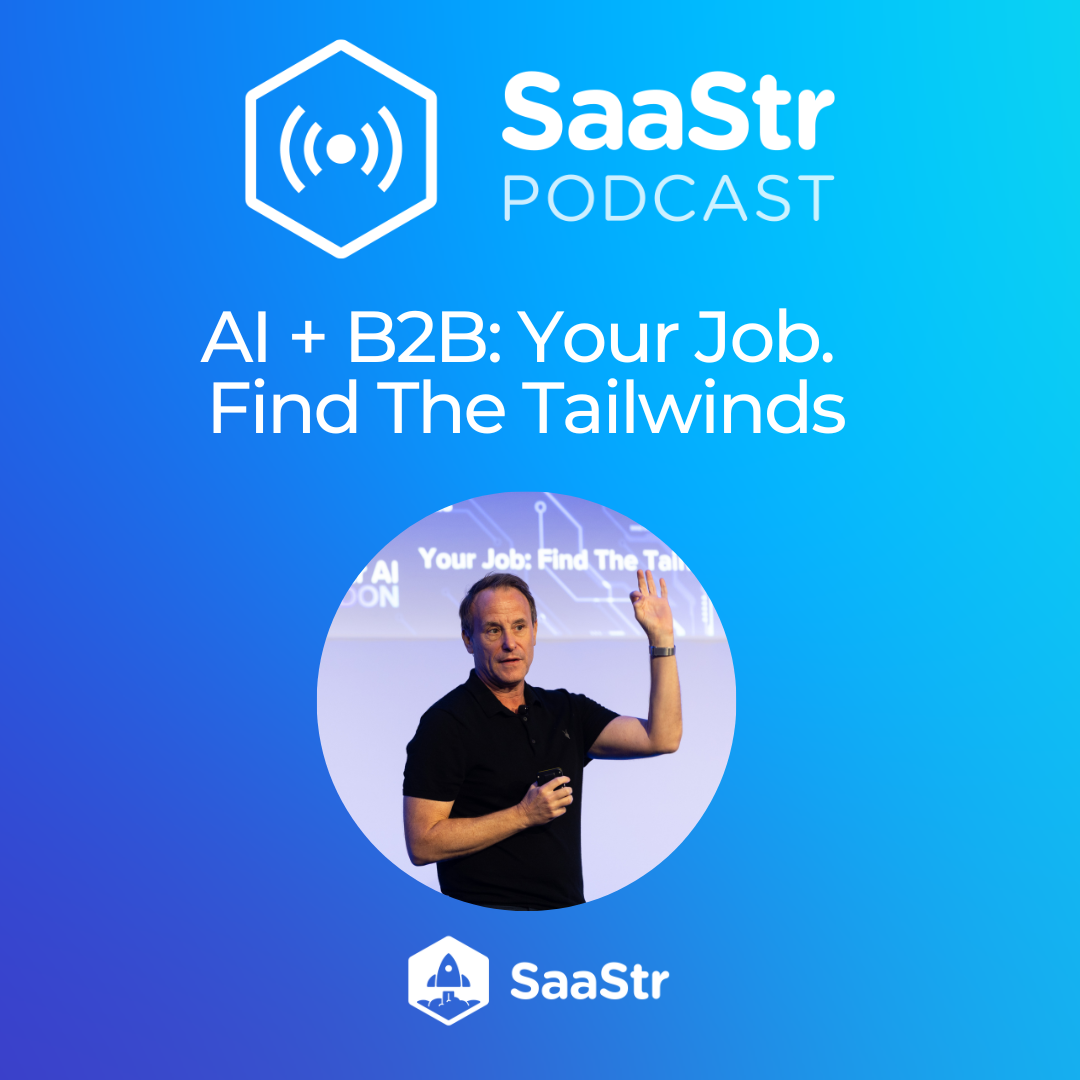
Fears of revenue collapse from companies optimizing token usage are premature. While top firms implement spending caps, the median company spends a trivial $11.38 per employee on AI. The massive growth potential as these firms scale their usage will dwarf any revenue lost at the top end from efficiency-seeking behavior.

The explosive AI revenue growth stems from corporations re-categorizing the spending. It's no longer a line item in a constrained IT budget but a strategic investment in labor augmentation and replacement. This unlocks a vastly larger pool of capital from operational budgets, fueling hypergrowth.

The 'SaaS-pocalypse' narrative is flawed because IT/SaaS is only 8-12% of enterprise spend. Companies will use powerful AI models to create value in the other 90% of their business—like operations and sales—rather than just rebuilding core software like ERPs or CRMs where the financial upside is limited.
Unlike traditional software where businesses consolidate on single vendors, the most advanced AI adopters actively use a multi-vendor strategy. The top 1% of AI spenders use an average of eight different vendors to leverage the best model for each task and stay ahead in a rapidly innovating market.
A study by fintech company Ramp revealed a strong, recent correlation between AI spending and business performance. Customers in the top quartile for AI spend doubled their revenue, while the bottom quartile saw flat growth. This link was absent just six months prior, signaling AI's shift from experiment to growth driver.

Despite widespread narratives, business spending data shows no significant shift away from traditional SaaS models. The two core predictions of the "SaaSpocalypse"—the death of major SaaS players and a move away from seat-based pricing—are not supported by current business behavior.
