Get your free personalized podcast brief
We scan new podcasts and send you the top 5 insights daily.
The Panova 3 trial proved TTFields' benefit with a gemcitabine-based chemotherapy. However, with up to 50% of patients receiving the FOLFIRINOX regimen, it is unknown if TTFields provide the same survival benefit when combined with this common alternative, representing a critical evidence gap for clinicians.

Related Insights
Data suggests combining encorafenib and cetuximab with a FOLFIRI chemotherapy backbone, rather than FOLFOLX, yields superior outcomes in BRAF V600E-mutated metastatic colorectal cancer. This preference is based on both clinical data and a biological rationale that irinotecan synergizes better with MAPK pathway inhibitors.
Pivotal trials for PARP inhibitor and ARPI combinations (e.g., PROPEL, MAGNITUDE) enrolled patients who were largely ARPI-naive. However, in modern practice, most patients receive an ARPI earlier in their treatment. This creates significant uncertainty about the benefit of these combinations for the majority of today's patients.

Given that standard therapies for metastatic pancreatic cancer are not curative, leading oncologists argue that clinical trials should be the primary consideration for all eligible patients. Standard chemotherapy regimens are viewed as fallback options. This approach frames trials as the best path to advancing care, not an experimental last resort.
The FDA-approved Optune device, which uses tumor-treating fields, significantly improved median overall survival and pain-free survival for patients with locally advanced, unresectable pancreatic cancer when added to chemotherapy, offering a new non-invasive treatment option.

The Nalirifox regimen uses a lower oxaliplatin dose (60 mg/m²) than traditional Folfirinox. This counterintuitively results in a significantly lower incidence of grade 3 neuropathy (3%), enhancing tolerability and allowing patients to remain on a key therapy longer, a critical factor for improving outcomes in pancreatic cancer.
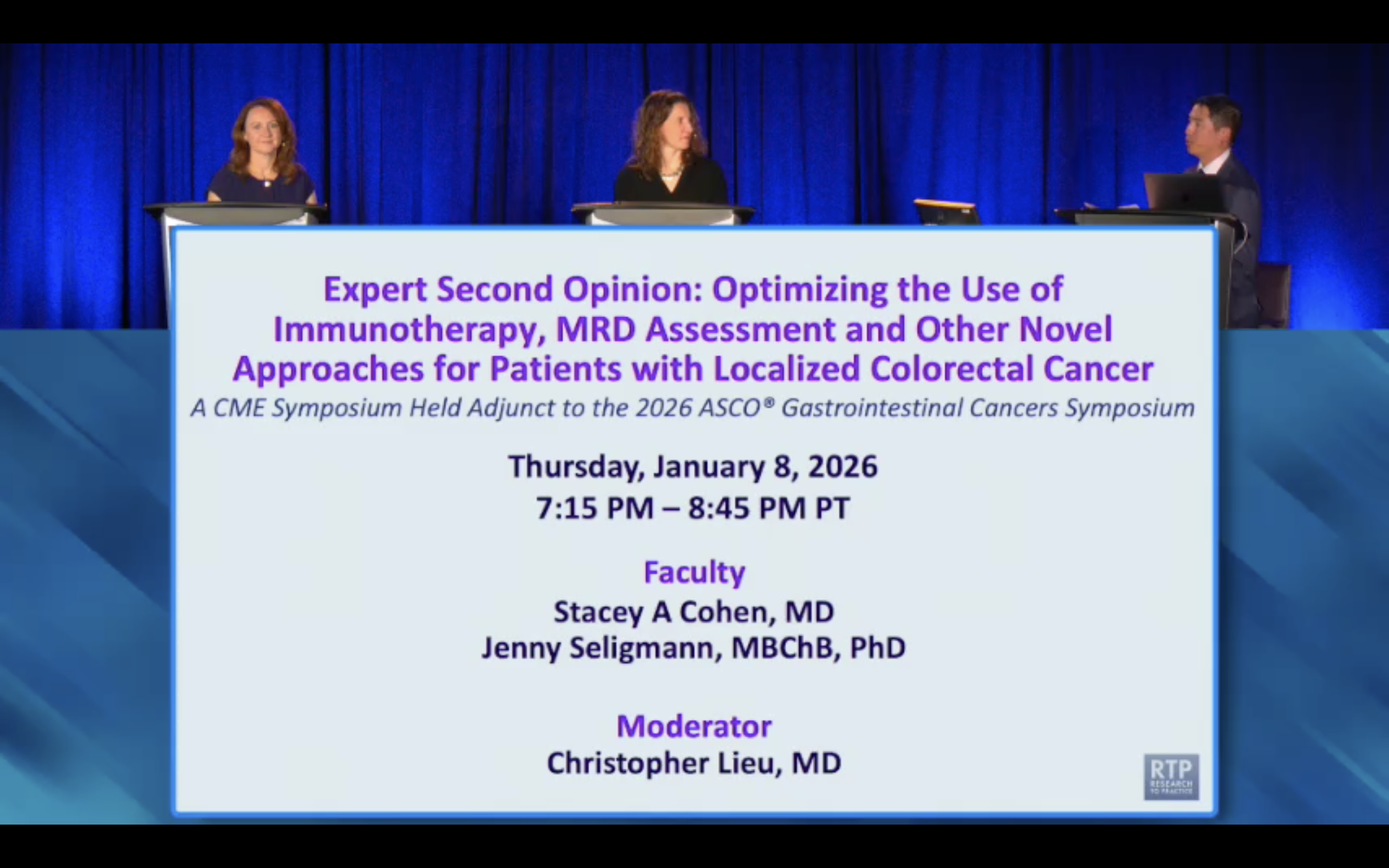
While the ATOMIC trial established FOLFOX plus atezolizumab as a new standard for adjuvant therapy in MSI-high colon cancer, its design lacked an immunotherapy-only arm. This leaves a critical, unanswered question about the actual contribution and necessity of the chemotherapy component.
The efficacy of new KRAS inhibitors is set to fundamentally shift pancreatic cancer research. These agents are expected to become the new standard therapeutic backbone, meaning future clinical trials will likely test new drugs in combination with a RAS inhibitor, moving beyond chemotherapy-only combinations.
While approved for locally advanced pancreatic cancer, experts are already questioning its potential in broader applications. Future research could explore using TTFields for low-volume metastatic disease or in older patients unfit for surgery, suggesting the current approval may be a starting point for expanded use.
Clinical data revealed a surprising synergy: patients receiving TAMP after chemoradiation had a 60% two-year survival rate. The theory is that radiation remodels the tumor's microvasculature, reducing drug washout and effectively 'priming' the tumor for this regional therapy.
The mechanism of Tumor-Treating Fields extends beyond direct cell killing. It gently controls cancer by altering the tumor's microenvironment and overall biology to be more favorable. This not only controls tumor growth but can also contribute to symptomatic relief for the patient.