Get your free personalized podcast brief
We scan new podcasts and send you the top 5 insights daily.
The 'Scientist AI' doesn't require a universal database of facts. It only needs a small set of unimpeachable data, like mathematical proofs, to learn the syntactic difference between a factual claim and a communication act. It can then generalize this concept of 'truthfulness' to more ambiguous domains.
Related Insights
Generative AI can produce the "miraculous" insights needed for formal proofs, like finding an inductive invariant, which traditionally required a PhD. It achieves this by training on vast libraries of existing mathematical proofs and generalizing their underlying patterns, effectively automating the creative leap needed for verification.

Languages like Lean allow mathematical proofs to be automatically verified. This provides a perfect, binary reward signal (correct/incorrect) for a reinforcement learning agent. It transforms the abstract art of mathematics into a well-defined environment, much like a game of Go, that an AI can be trained to master.

The purpose of creating a superhuman mathematician is not just to solve proofs, but to establish a system of verifiable reasoning. This formal verification capability will be essential to ensure the safety, reliability, and collaborative potential of all future AI code and superintelligence.

AI's creative process mirrors Karl Popper's model of science. A generative model 'conjectures' plausible hypotheses (or hallucinates), and a verifier then attempts 'refutation' by testing them against hard criteria. This explains why AI currently excels in verifiable domains like code and mathematics, where correctness can be proven.
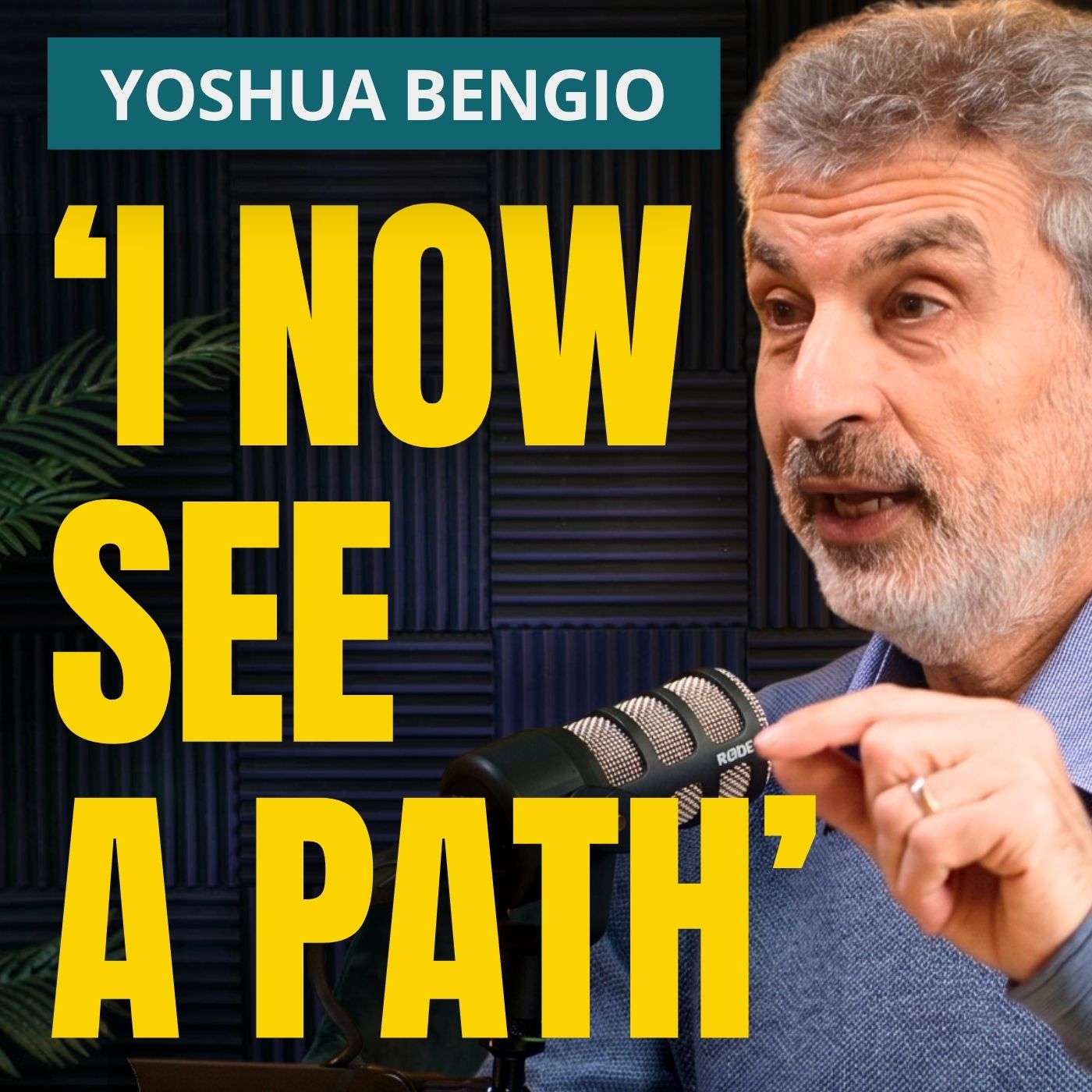
Bengio proposes a new AI training paradigm. Instead of predicting the next word like current LLMs, a 'Scientist AI' would model the world and assign probabilities to statements being true. This is designed to bake honesty into the system's core, addressing fundamental safety issues.
Language models work by identifying subtle, implicit patterns in human language that even linguists cannot fully articulate. Their success broadens our definition of "knowledge" to include systems that can embody and use information without the explicit, symbolic understanding that humans traditionally require.

Bengio's method involves a crucial data preprocessing step: syntactically tagging text as either a 'communication act' (e.g., 'someone said X') or a 'verified factual claim.' This distinction allows the AI to learn the difference between what people say and what is true about the world.
LLMs initially operate like philosophical nominalists (truth from language patterns), a model that proved more effective than early essentialist AI attempts. Now, we are trying to ground them in reality, effectively adding essentialist characteristics—a Hegelian synthesis of opposing ideas.
To combat AI-generated misinformation, we need decentralized, cryptographic truth systems, similar to Bitcoin's ledger. This allows anyone to verify facts independently, free from corporate paywalls or government control, creating a 'ledger of record' that proves what is real rather than just asserting it.

Simply generating a mathematical proof in natural language is useless because it could be thousands of pages long and contain subtle errors. The pivotal innovation was combining AI reasoning with formal verification. This ensures the output is provably correct and usable, solving the critical problems of trust and utility for complex, AI-generated work.
