Get your free personalized podcast brief
We scan new podcasts and send you the top 5 insights daily.
The delayed ramp of AMD's Helios AI system is more than a timeline slip; it indicates a lack of institutional knowledge in assembling complex, cabled, rack-scale hardware—a learning curve rival NVIDIA has already overcome.

Related Insights
The AI supply chain is crunched not just by obvious components like TSMC wafers and HBM memory. A significant, often overlooked bottleneck is rack manufacturing—including high-speed cables, connectors, and even sheet metal—which are "sneaky hard" due to extreme power, heat, and signal integrity demands.

The Rubin family of chips is sold as a complete "system as a rack," meaning customers can't just swap out old GPUs. This technical requirement creates a forced, expensive upgrade cycle for cloud providers, compelling them to invest heavily in entirely new rack systems to stay competitive.
AI software models advance every few months, creating exponential demand. However, the hardware infrastructure like chip fabs operates on two-to-four-year development cycles. This timeline disconnect between software's rapid pace and hardware's slow build-out creates a persistent supply crunch that money alone cannot instantly solve.
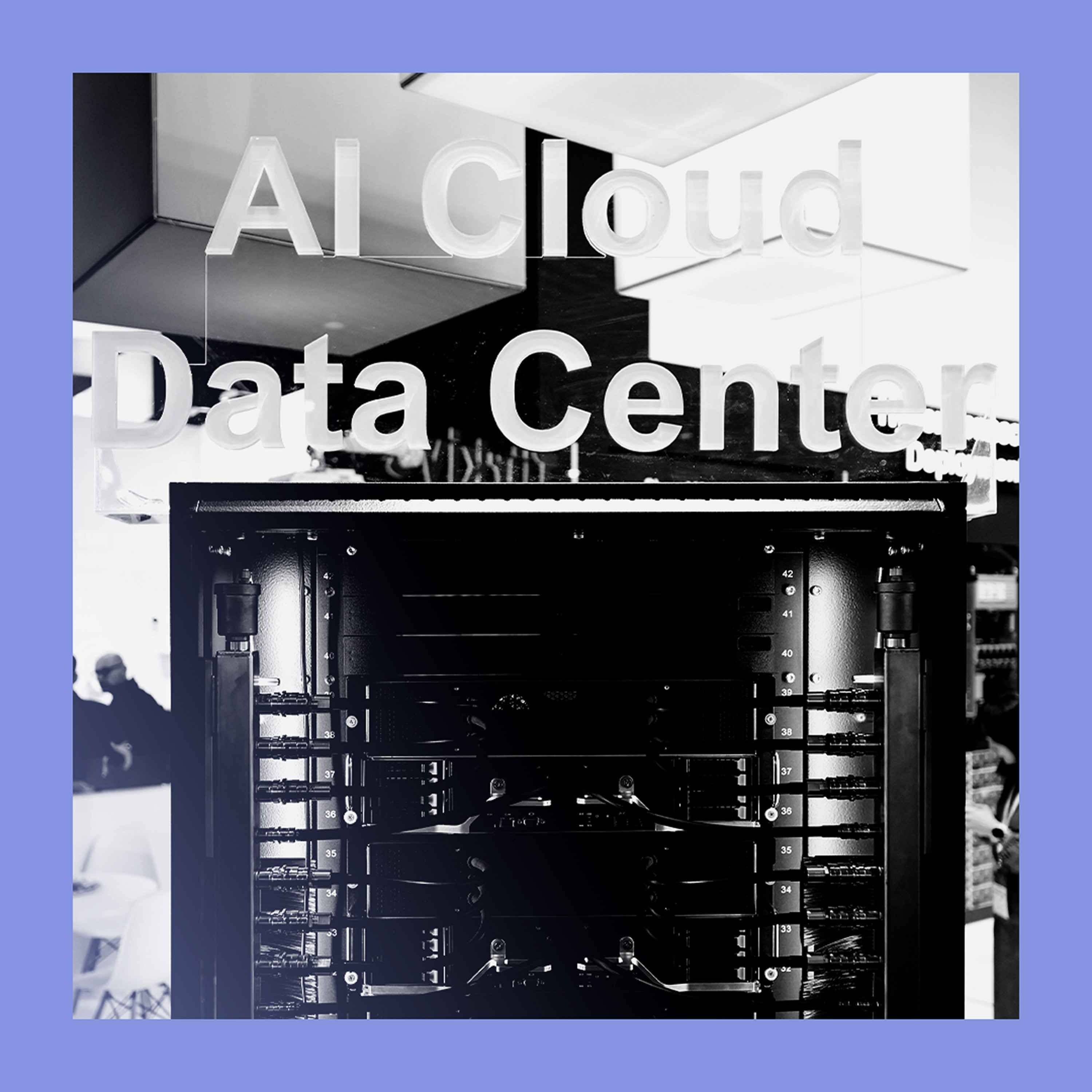
While NVIDIA's GPUs have been the primary AI constraint, the bottleneck is now moving to other essential subsystems. Memory, networking interconnects, and power management are emerging as the next critical choke points, signaling a new wave of investment opportunities in the hardware stack beyond core compute.
AMD competes with NVIDIA not just on GPU performance but by leveraging its wider range of CPUs. These are crucial for agentic AI workloads requiring many parallel processes, giving AMD an advantage over NVIDIA's more limited, GPU-focused CPU offerings.
The demand for AI processing power so vastly outstrips supply that it creates a "compute deficit." This forces major AI players to adopt any viable chip solution they can find, including from AMD. It's not about being better than NVIDIA; it's about being available, ensuring a market for second and third-tier suppliers.
Analyst Chris Miller notes that AMD's challenge extends beyond competing with Nvidia. Hyperscalers like Google, Meta, and Microsoft are developing potent in-house ASICs (e.g., Google's TPUs), creating a crowded market and reducing AMD's addressable share.
Top AI companies like Meta, Microsoft, and OpenAI are so desperate for compute that they willingly manage systems from both NVIDIA and AMD. This urgent need for capacity overrides the significant operational complexity of writing software that works across different hardware vendors.
Public announcements for massive new data centers may be "pollyannish." The reality is constrained by long lead times for critical hardware components like power generators (24 months) and transformers. This supply chain friction could significantly delay or derail ambitious AI infrastructure projects, regardless of stated demand.
Previously, the bottleneck for AI labs was researcher time, making Nvidia's easy-to-use CUDA ecosystem dominant. Now, the biggest cost is compute capacity itself, creating massive economic incentives for labs to adopt cheaper, even if less convenient, competing chips from AMD or Google.