Get your free personalized podcast brief
We scan new podcasts and send you the top 5 insights daily.
Work will bifurcate into two modes: delegating tasks to asynchronous agents (e.g., in Slack) and performing core work inside AI-native environments like Codex. These platforms will become the primary operating system where you run other apps, rather than AI being just a feature within apps.

Related Insights
As AI agents take over task execution, the primary role of human knowledge workers evolves. Instead of being the "doers," humans become the "architects" who design, model, and orchestrate the workflows that both human and AI teammates follow. This places a premium on systems thinking and process design skills.

Early adopters are abandoning the 'fire-and-forget' model of autonomous agents running on dedicated hardware. The new paradigm uses tools like Codex as integrated 'operating systems' for work. This approach favors closer, semi-synchronous collaboration across multiple devices over the high-latency, low-control model of full autonomy.

The future of work isn't just using AI as a tool, but managing it. Greg Brockman describes a paradigm where users act as high-level overseers, setting goals for a "fleet of agents" that handle the low-level execution, abstracting away details like clicking buttons or writing specific formulas.

The new paradigm for knowledge workers isn't about using AI as a tool, but as a team of digital employees. The worker's role evolves into that of a manager, assigning tasks and reviewing the output of autonomous AI agents, similar to managing freelancers.
The primary interface for managing AI agents won't be simple chat, but sophisticated IDE-like environments for all knowledge workers. This paradigm of "macro delegation, micro-steering" will create new software categories like the "accountant IDE" or "lawyer IDE" for orchestrating complex AI work.
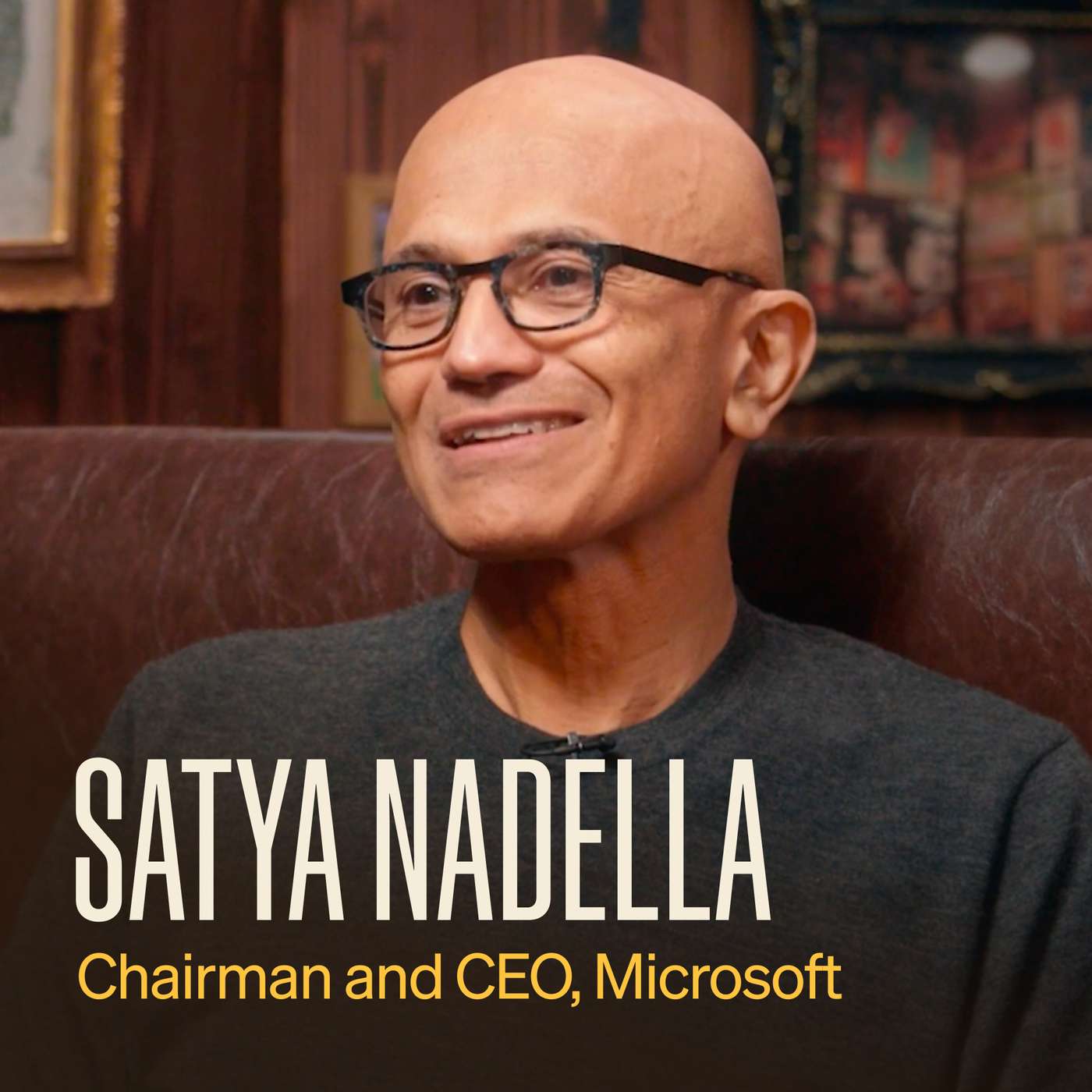
The adoption of powerful AI agents will fundamentally shift knowledge work. Instead of executing tasks, humans will be responsible for directing agents, providing crucial context, managing escalations, and coordinating between different AI systems. The primary job will evolve from 'doing' to 'managing and guiding'.
Knowledge work will shift from performing repetitive tasks to teaching AI agents how to do them. Workers will identify agent mistakes and turn them into reinforcement learning (RL) environments, creating a high-leverage, fixed-cost asset similar to software.

The next leap in productivity isn't just using an AI assistant for synchronous tasks. It's becoming an "IC manager of agents," overseeing a team of 20-30 AI agents working concurrently on long-running, asynchronous tasks, creating a massive leverage factor.

The future of work is shifting from app-switching to managing tasks through a unified agent interface. Companies like OpenAI (Codex) and Anthropic (Claude Code) are racing to create this new "operating system," a desktop app that serves as the primary surface for all agent-driven knowledge work.

The evolution of Codex, a coding assistant, to manage general computer tasks and documents indicates a broader trend: the structured, agentic workflows of programming are being applied to all knowledge work. This reframes tasks like reporting and data entry as forms of 'coding'.